Bitcoin vs Real Estate: Which One Can Regular People Actually Afford?
The median existing home sold for $429,100 in August 2026. Bitcoin starts at $1. Here's an honest comparison of two inflation hedges for people who don't have six figures lying around.
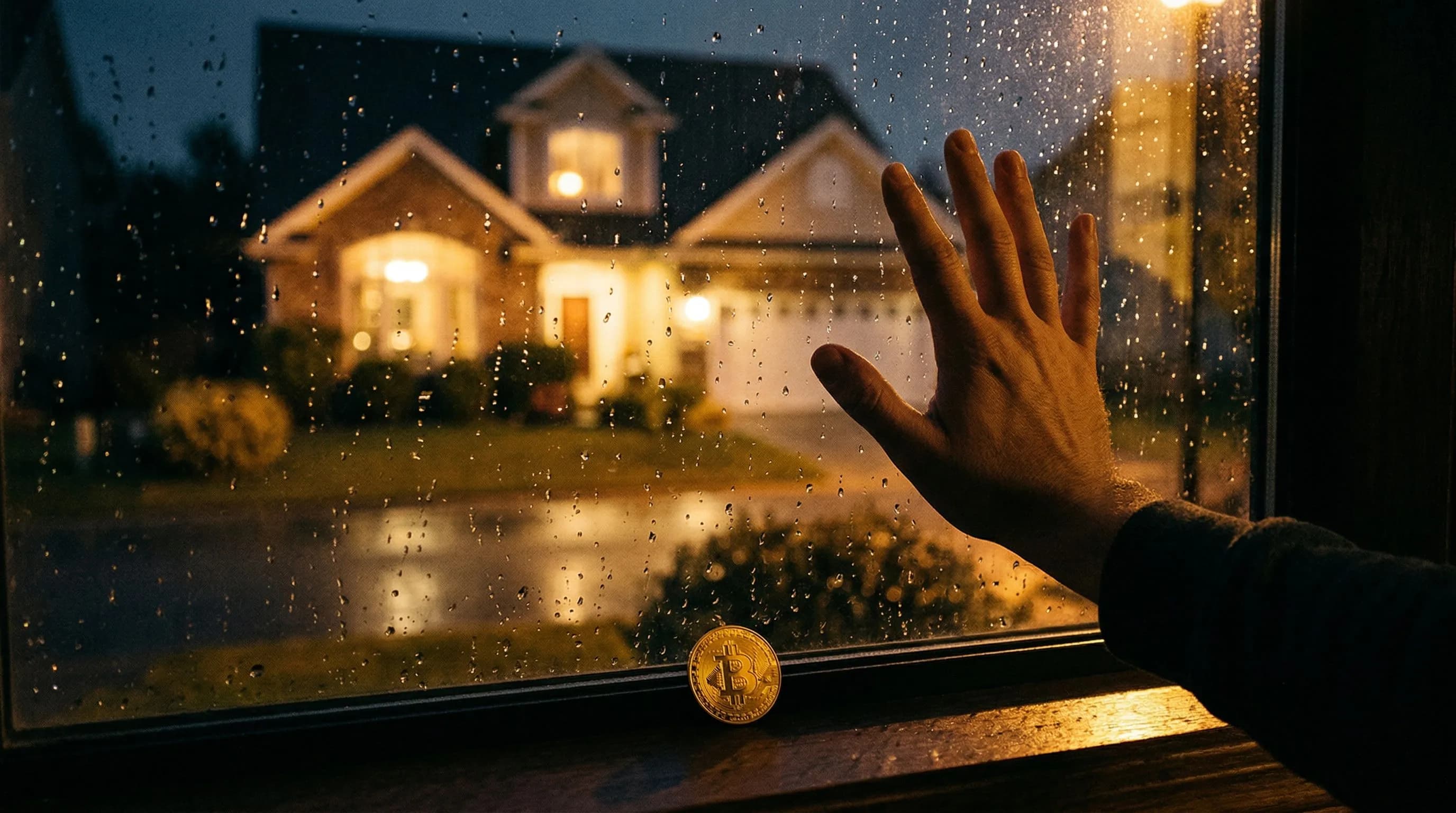
The median existing home in the U.S. sold for $429,100 in August 2026, according to the National Association of Realtors, and closing on one with an FHA loan takes roughly $25,000 in cash. Bitcoin requires $1 and a phone. For the millions of Americans who cannot afford a home down payment, Bitcoin removes every barrier that real estate puts up, with no credit check, no bank approval, and no minimum investment.
You have been told your entire life that buying a house is the smartest financial move you can make. "Build equity." "It's an investment." "You're throwing money away on rent."
There is truth in some of that. But there is also a massive blind spot nobody talks about: the barrier to entry.
The median existing home in the U.S. sold for $429,100 in August 2026, according to the National Association of Realtors. A 20% down payment on that is $85,820. Even at 3.5% down through an FHA loan, you need $15,019 in cash, plus closing costs, plus proof that a bank trusts you enough to lend you the rest.
Bitcoin costs $1 to start. No bank approval. No credit check. No closing costs. No inspection. Open your phone, tap buy, done.
This is not a "crypto bro" argument against homeownership. This is a math argument about who actually has access to inflation protection in 2026.
Real estate is a proven wealth-building vehicle, but the median home now sells for about $429K, pricing out most young Americans. Bitcoin lets you start protecting your purchasing power with $1 and dollar cost average into it weekly. Real estate wins on leverage, tax benefits, and stability. Bitcoin wins on accessibility, liquidity, and historical returns. For people starting from zero, Bitcoin removes every barrier that real estate puts up.
Read more: Your money is losing value | Bitcoin for Beginners
The Real Cost of Buying a Home in 2026
The sticker price is just the beginning. Here is what homeownership actually costs when you add up everything nobody mentions at the open house.
| Cost | Amount |
|---|---|
| Getting in the door | |
| Down payment (20%) | $85,820 |
| Down payment (FHA, 3.5%) | $15,019 |
| Closing costs (2-5%) | $8,582 - $21,455 |
| Home inspection | $300 - $500 |
| Appraisal | $300 - $600 |
| Moving costs | $1,000 - $5,000 |
| Minimum to close (FHA) | ~$25,000+ |
| Every year after, on a $429K home | |
| Mortgage payment (7.40% rate, 30yr, 20% down) | ~$28,500 |
| Property taxes (~0.9% national effective rate) | ~$3,860 |
| Homeowner's insurance | ~$2,500 |
| Maintenance (1-2% of value) | $4,290 - $8,580 |
| PMI (only if < 20% down) | ~$1,500 - $3,500 |
| Total annual cost (20% down, no PMI) | ~$39,000 - $43,500 |
The top half is day one. The bottom half is every year you own the house.
Mortgage rate: 7.40% for the week of October 8, 2026, per Freddie Mac. Property tax: 2025 national effective rate for single-family homes, per ATTOM. Insurance: NerdWallet 2026 national average. PMI: $30 to $70 a month per $100,000 borrowed, per Freddie Mac.
That is $3,260 to $3,620 per month before a single repair, upgrade, or surprise. A new roof or a furnace replacement can run into the thousands. A burst pipe on a holiday weekend is whatever the emergency plumber decides to charge.
And here is the part that really stings: over the life of a 30-year mortgage at 7.40% with 20% down, you will pay roughly $512,000 in interest alone. That means a $429,100 house actually costs you about $941,000 by the time you make your final payment.
Nobody puts that number on the Zillow listing. It never shows up in the first-time-buyer brochure. The monthly payment looks manageable, the down payment feels like a stretch but doable, and then the total cost of the thing over three decades quietly more than doubles. That is not a housing market problem. That is how every mortgage works, and the bank is counting on you not running the math before you sign.

For the first ten years, about 84 cents of every dollar you send the bank goes to interest, not principal. You are paying for the privilege of living there while the loan balance barely moves. Equity builds, slowly, but the real winner of the first decade is the lender. This is not a conspiracy, it is an amortization schedule, and it is written into every mortgage agreement in plain English that almost nobody reads.
Over 30 years at 7.40% interest with 20% down, you pay more in mortgage interest ($512K) than the original price of the house ($429K). Until about year 21, more of every payment goes to the bank's interest than to your principal.
What Bitcoin Costs to Start
Here is what you need to buy Bitcoin:
That is it. No credit check. No bank approval. No appraisal, no inspection, no closing costs, no realtor fees. You do not need to prove your income. You do not need two years of tax returns. You do not need a "good enough" debt-to-income ratio.
You open an app, type in an amount, and tap buy. Your first satoshis show up in seconds.
Ongoing costs: the purchase fee and nothing else. Strike charges 0% on recurring buys after the first one and up to 0.89% on one-time buys. Cash App charges 0% on Auto Invest and up to 2% plus a spread on one-time buys under $500. Maintenance, property taxes, insurance and repairs all cost $0.
There is no maintenance. There is no property tax. There is nothing that breaks at 2 AM and needs an emergency fix. You buy it and hold it. That is the whole thing.
Two things the app will not put on the buy button. First, Bitcoin in an app is not a bank deposit: the FDIC lists crypto assets among the products it does not insure, and SIPC does not protect crypto that is not a registered security, even at a member brokerage. Second, the IRS treats digital assets as property, so selling Bitcoin for more than you paid is a taxable capital gain. If the app ever fails, or you want the coins out of a company's hands, moving them to a wallet you control is the fix.
Head-to-Head: The Honest Comparison
Neither asset is perfect. Both have real strengths and real weaknesses. Here is the full picture.
| Factor | Real Estate | Bitcoin |
|---|---|---|
| Minimum to start | ~$25,000+ (FHA) | $1 |
| Approval required | Yes (credit, income, DTI) | No |
| Time to buy | 30-60 days | 30 seconds |
| Ongoing costs | $3,200+/month | $0 |
| Historical annual return | ~4.3% a year since 1987 (appreciation only) | ~64% a year, Sept 2016 to Sept 2026 (with extreme variance) |
| Worst drawdown | ~27% (2006 to 2012, Case-Shiller) | 77% to 93% (four times) |
| Volatility | Low | Very high |
| Leverage available | Yes (mortgage) | Not recommended |
| Tax advantages | Mortgage interest deduction, $250K/$500K capital gains exclusion | Long-term capital gains (held 1+ year) |
| Produces income | Yes (rent) | No |
| Liquidity | Weeks to months to sell | Minutes |
| Hours of operation | Business hours, weekdays | 24/7/365 |
| Physical asset | Yes | No |
| Can be destroyed | Yes (fire, flood, disaster) | No (lives on the network) |
Real estate returns and drawdown from the S&P Cotality Case-Shiller U.S. National Home Price Index (January 1987 to July 2026). Bitcoin return from Coin Metrics month-end closes; drawdowns from Coin Metrics daily closes.
~$25,000
Minimum cash needed to close on a median home (FHA)
Untaught calculation: 3.5% FHA down payment plus 2% closing costs and fees on the August 2026 NAR median price
The $20/Week Test
Here is a question nobody asks: can a 25-year-old making $40,000 a year actually participate in each of these?
Real estate at $20/week: You are saving $1,040 a year. At that rate, it takes roughly 24 years to save a $25,000 FHA down payment, not counting inflation making the target higher every year. By the time you have enough, the median home could cost $600,000+.
Bitcoin at $20/week: You buy $20 worth of Bitcoin every single week, starting today. No waiting. No qualifying. No target to hit before you can begin. You are building a position from day one.
If you had put $20 a week into Bitcoin from October 2021 to September 2026, your $5,200 in total contributions would have been worth about $10,100 at the September 2026 close, even after the pullback from the all-time high. (Model: $86.67 a month bought at each Coin Metrics month-end close.)
Put the two side by side with the other common starting points and the gap is not close. Here is the cash each one demands before your first purchase:
Minimum Cost to Start Investing
Cash needed before your first purchase. Log scale: each gridline is 100 times more money.
Sources: National Association of Realtors median existing-home price, August 2026 ($429,100); Bankrate closing-cost estimates; gold spot price plus a typical coin premium, October 2026.
The point is not that Bitcoin is "better" than real estate. The point is that you can actually start. You do not need money to start investing. You just need to stop waiting.
Stop waiting to save $25,000 for a down payment. Start putting $20/week into Bitcoin today. You can always buy a house later. But the years you spend waiting and doing nothing are years your money is losing purchasing power.
Where Real Estate Still Wins
This is not a hit piece on homeownership. Real estate has genuine advantages that Bitcoin does not offer.
Leverage
A mortgage lets you control a $429,100 asset with about $25,000 of cash. That is roughly 17x leverage. If the house goes up 5% in a year, your $429,100 home is now worth $450,555. You gained $21,455 on a $25,000 investment. That is an 86% return on your actual cash invested, before the year's interest, taxes, and upkeep.
No responsible financial advisor would recommend 17x leverage on Bitcoin. The volatility would wipe you out.
Tax Benefits
Mortgage interest is tax-deductible if you itemize (on up to $750,000 of mortgage debt). When you sell your primary residence, you can exclude up to $250,000 in capital gains ($500,000 for married couples) from taxes. No other asset class gets that treatment.
Rental Income
You can rent out a property and create monthly cash flow. Bitcoin does not produce income. It just sits there and either goes up or down in price.
Stability
Home prices do not drop 50-80% in a single year. The worst national decline in modern history was about 27% on the Case-Shiller index, from mid-2006 to early 2012, a slide that took about five and a half years to play out. Bitcoin has crashed 77% to 93% four times, sometimes in months. If you cannot handle watching your investment lose half its value and doing nothing, Bitcoin's volatility will test you.
Forced Savings
A mortgage payment forces you to build equity every month whether you feel like it or not. Many people struggle with voluntary saving. A mortgage takes that decision away. You pay or you lose the house. That is a powerful motivator.
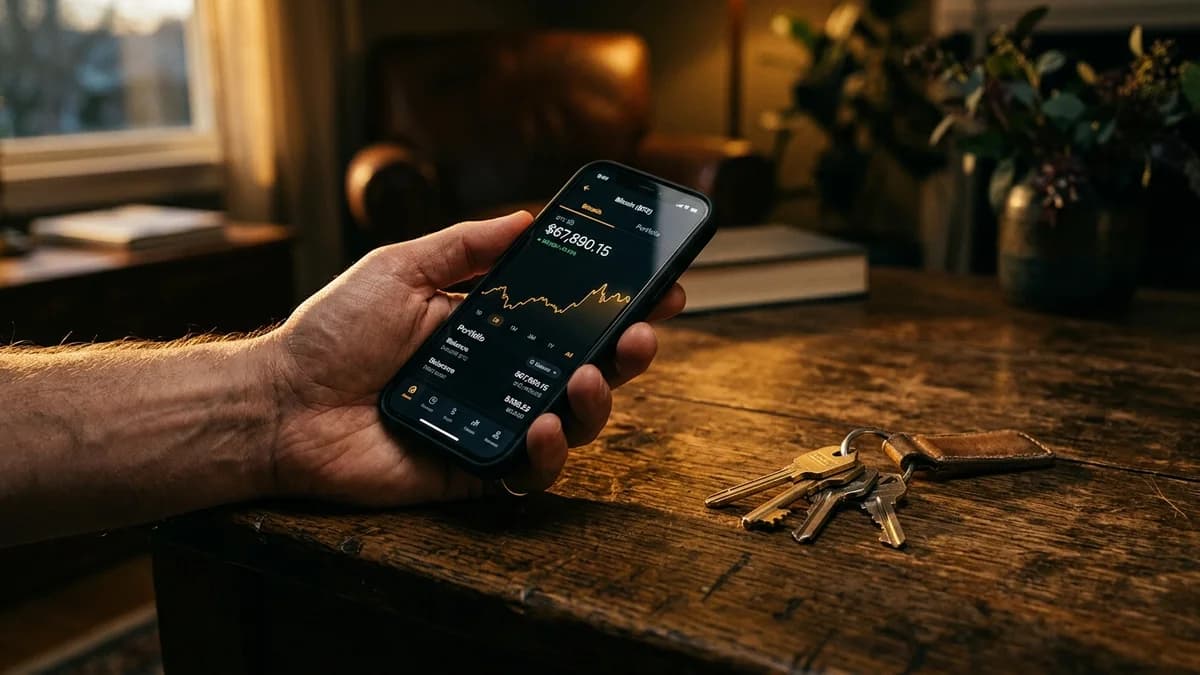
Where Bitcoin Wins for Regular People
No Gatekeepers
You do not need a bank's permission. You do not need a credit score above 620. You do not need two years of stable employment. You do not need a debt-to-income ratio below 43%. The 67% of Americans who say they live paycheck to paycheck (PYMNTS, 2025) are not locked out of Bitcoin the way they are locked out of homeownership.
Perfect Divisibility
You cannot buy 0.001% of a house. You can buy 0.001% of a Bitcoin. This is why satoshis exist. One Bitcoin equals 100 million satoshis. At about $83,000 per Bitcoin, one dollar buys you about 1,200 sats. You do not need to save for years before you can participate.
No Maintenance
Your Bitcoin does not need a new roof. The furnace does not break. The HOA does not raise fees. There is no termite inspection, no repainting, no "the dishwasher just died." You buy it and hold it. End of story.
Liquidity
Need to sell some Bitcoin on a Sunday night at 11 PM? Done. Takes minutes. Try selling a house on a Sunday night. You are looking at listing it, staging it, showings, negotiations, inspections, appraisals, and 30-60 days to close. And agent commissions typically take around 5% to 6% of the sale price.
Portability
You can take your Bitcoin anywhere on Earth. It exists on a decentralized network, not in a county recorder's office. You cannot pack up your house and move it to another state.
The Honest Take
Real estate is a proven wealth-building vehicle. If you can afford it, buying a home can be a great financial move. The leverage, tax benefits, and forced savings are real advantages.
But "if you can afford it" is doing a lot of heavy lifting in that sentence. In 2026, most young Americans cannot. The homeownership rate for householders under 35 was 35.2% in the second quarter of 2026, according to the Census Bureau, lower than a year earlier. The longer record shows that is not a blip:
Under 35 and Still Renting
Homeownership rate, second quarter of each year, 1994 to 2026. Under-35 ownership peaked at 43.6% in 2004 and was 35.2% in 2026.
Source: U.S. Census Bureau, Housing Vacancies and Homeownership, Table 19 (second-quarter rates). Census cautions that the 2020 spike partly reflects pandemic changes to how it ran interviews.
Under-35 ownership has never recovered its 2004 peak of 43.6%, while the rate for all households has stayed in the mid-60s the whole time. The older owners kept their houses. The younger buyers never got in.
The American Dream of homeownership requires either family wealth, high income, or years of aggressive saving while housing prices keep outpacing your paycheck. For most people, it is not the first rung on the wealth-building ladder anymore. It is the fifth or sixth.
Bitcoin is the first rung. A dollar. A phone. A decision to start.
You do not have to choose one forever. You can DCA $20 a week into Bitcoin right now, today, while you are still years away from being able to afford a down payment. Let your money start working for you instead of sitting in a savings account losing value.
The worst financial decision is not picking the wrong asset. It is waiting to start.
Stop waiting. Start stacking.
Learn how to protect your purchasing power, one small step at a time.
Frequently Asked Questions
These are the questions that come up every time someone runs the real-estate-versus-Bitcoin comparison. Plain answers, no sales pitch for either side.
Read the ones that match your situation and skip the rest. The goal is not to convince you that a house is bad or that Bitcoin is magic. The goal is to give you the real numbers so the next move you make is your own, not something the bank or a realtor nudged you into.
Neither is "safe" in the traditional sense. Real estate is more stable (lower volatility) but requires massive upfront capital and has ongoing costs. Bitcoin is more volatile but has no maintenance costs and no gatekeepers. Safety depends on your timeline, risk tolerance, and how much capital you have to start with.
No. This article is not about replacing homeownership. If you already own a home, that is great. This comparison is for people who cannot yet afford to buy a home and are wondering what to do with their money in the meantime. Dollar cost averaging into Bitcoin while you save for a down payment is one approach.
REITs (Real Estate Investment Trusts) let you invest in real estate without buying property. You can start with $1 through fractional shares. REITs pay dividends and returned about 9% to 11% a year from 1972 through 2022, depending on the index, per Nareit. They are a valid middle ground, but they do not offer the same leverage or tax advantages as direct homeownership, and they still underperform Bitcoin's historical returns.
Yes. Many Bitcoin investors have done exactly this. Accumulate sats over several years through DCA, then sell a portion for a down payment when you are ready. Keep in mind that selling Bitcoin triggers a capital gains tax event, so factor that into your planning.
This article is part of the Your Money Is Losing Value series on Untaught. Every dollar you hold loses purchasing power. The question is what you do about it.
This article is for educational purposes only and does not constitute financial advice. Untaught does not hold, move, or custody any funds. Past performance does not guarantee future results. Always do your own research before making investment decisions.
Quick calculator
Your coffee money could have become
$19,233
from $9,900 invested
Monthly buys, Oct 2021 to Sep 2026, at Coin Metrics month-end closes. Past results, not a forecast.