Bitcoin for Beginners: What It Is, How to Buy It, and Why People Are Choosing It
Bitcoin has a fixed supply of 21 million coins and no minimum to buy. Here's what it is, how it works, and how to get started with as little as $1.
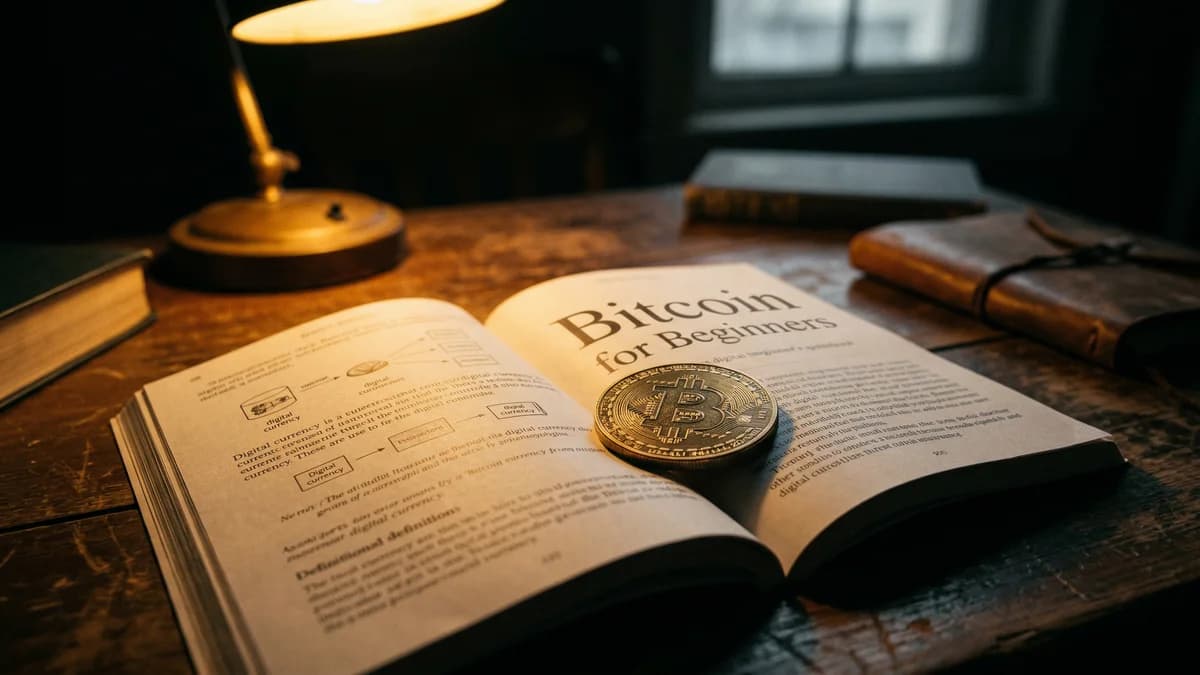
Bitcoin is a digital currency with a fixed supply of 21 million coins, controlled by no government or central bank. It runs on a decentralized network where transactions are recorded publicly on a blockchain. You can buy fractions of a Bitcoin (called satoshis) for as little as $1 through apps like Strike or Cash App.
You've heard the word "Bitcoin" a thousand times. In headlines. On social media. From your cousin who won't stop talking about it at Thanksgiving.
But nobody ever sat you down and explained what it actually is. Not in plain language. Not without the jargon, the hype, or the weird internet culture that makes the whole thing feel like a club you weren't invited to.
That changes right now. This is the explanation you should have gotten years ago. No assumed knowledge. No acronyms without definitions. Just the facts, laid out simply, so you can decide for yourself whether this belongs in your financial plan.
Bitcoin is digital money with a fixed supply of 21 million coins. Nobody can print more. You don't need to buy a whole coin; you can start with $1. Apps like Strike and Cash App let you set up automatic weekly purchases in minutes. It's volatile, it's not guaranteed, and it's not for money you can't afford to lose. But for people watching their dollars lose purchasing power year after year, it's one tool worth understanding.
What Is Bitcoin, Exactly?
Bitcoin is digital money. That's it. No physical coins. No paper bills. Just a record on a global network of computers that tracks who owns what.
But here's what makes it different from the dollars in your bank account: nobody controls it. There's no company behind Bitcoin. No CEO. No board of directors. No government can change its rules or print more of it.
It runs on a technology called a blockchain, which is just a fancy word for a shared ledger. Think of it like a public spreadsheet that everyone in the world can see, but nobody can cheat on. Every transaction ever made in Bitcoin is recorded on this ledger. It's transparent, permanent, and open to anyone.
Bitcoin was created in 2009 by someone (or a group of people) using the name Satoshi Nakamoto. To this day, nobody knows who they are. That might sound sketchy, but it's actually part of the point. Bitcoin doesn't depend on any single person or organization to function. It runs on math, not trust.
Why Does a Fixed Supply Matter?
This is the most important thing to understand. There will only ever be 21 million Bitcoin. That number is baked into the code. It cannot be changed.
Compare that to the U.S. dollar. Between 2020 and 2022, the Federal Reserve increased the U.S. money supply by roughly 40%, according to Federal Reserve M2 data. They created trillions of new dollars.
40%
U.S. money supply growth in just two years (2020-2022)
Federal Reserve, M2 data
Bitcoin can't do that. Nobody can decide to make more of it. The supply is fixed, forever.
This is why some people call Bitcoin "digital gold." Gold is valuable partly because there's a limited amount of it on Earth. You can't just make more gold. Bitcoin works the same way, except the limit is exact and known: 21 million.
When demand for something grows but the supply can't, the price tends to rise. That's basic economics. It's why people are choosing to put some of their money into Bitcoin instead of leaving it all in dollars that keep losing value.
What Is a Satoshi?
Here's the biggest misconception about Bitcoin: you don't need to buy a whole one.
One Bitcoin costs tens of thousands of dollars. But you don't buy a whole Bitcoin any more than you buy a whole share of Berkshire Hathaway to invest in the stock market. You buy a piece.
The smallest unit of Bitcoin is called a satoshi, or "sat" for short. It's named after Bitcoin's creator. There are 100 million satoshis in a single Bitcoin.
Think of it like dollars and cents. One dollar equals 100 cents. One Bitcoin equals 100,000,000 sats. When you buy $5 worth of Bitcoin, you're buying sats. Thousands of them. And they add up over time.
At today's prices, $20 buys you roughly 20,000 to 25,000 sats. Next week it might be more. The week after, it might be less. But if you keep buying small amounts on a regular schedule, you're building a position, sat by sat, without needing a pile of money to start.
That's what people mean when they say "stacking sats." It just means accumulating small amounts of Bitcoin over time. Nothing fancy. Nothing complicated.
How Do You Actually Buy Bitcoin?
Buying Bitcoin is easier than opening a bank account. Seriously. It takes about 10 minutes on your phone.
Here are three popular options for beginners:
Strike
Strike is a free app built specifically for buying Bitcoin. You download it, verify your identity (name, address, Social Security number), link your bank account, and set up a recurring purchase. That's it.
Strike lets you buy with no minimum and charges low fees. You can set up a $5, $10, or $20 weekly purchase that runs automatically. You don't even have to think about it after the initial setup.
Cash App
You might already have Cash App for sending money to friends. It also lets you buy Bitcoin. Open the app, tap the Bitcoin tab, and you can buy any amount. Cash App also supports recurring purchases, so you can automate your weekly buy.
Coinbase
Coinbase is one of the largest cryptocurrency exchanges in the U.S. It has a more feature-rich interface, which can feel overwhelming for beginners but offers more options as you learn. It supports recurring purchases and has a simple mode for new users.
All three are legitimate, regulated platforms. Pick the one that feels simplest to you. The best app is the one you'll actually use.
Read more: What is dollar cost averaging? | What Is Fiat Currency?
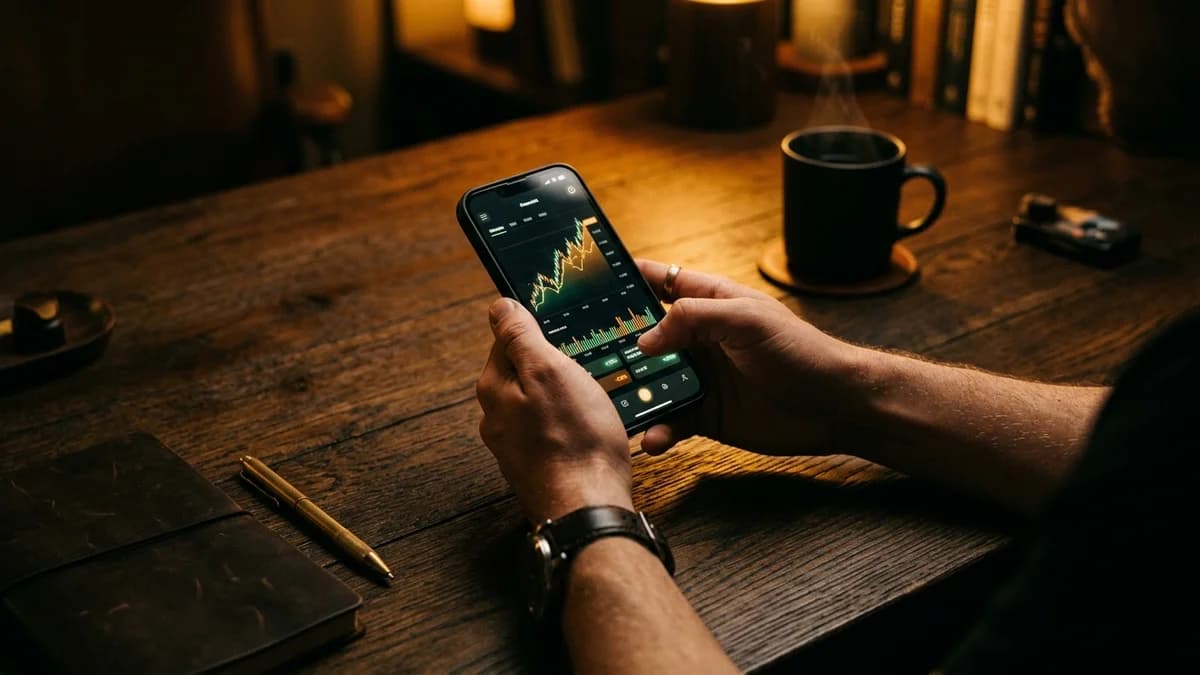
What Is DCA, and Why Does It Matter for Bitcoin?
DCA stands for dollar cost averaging. It means buying a fixed dollar amount on a regular schedule, no matter what the price is doing.
Why does this matter so much for Bitcoin specifically? Because Bitcoin is volatile. It can swing 20% or 30% in a single month. That terrifies people. It's the number one reason most beginners buy once, watch the price drop, panic, and sell at a loss.
DCA solves this problem completely.
When the price is high, your $20 buys fewer sats. When the price drops, your $20 buys more sats. Over time, you end up with a solid average cost. You don't need to predict where the price is going. You don't need to read charts. You just show up every week with the same amount.
The people who've done best with Bitcoin aren't traders. They're the boring ones. The ones who set up a $10 or $20 weekly buy and didn't touch it for years. They bought through crashes, bought through rallies, and let time do the work.
Want a deeper explanation? Read our full guide on what dollar cost averaging is and why it works.
Want to understand what school never taught about money?
Join thousands learning how to protect their purchasing power and build real wealth.
What About Self-Custody?
You'll eventually hear the phrase "not your keys, not your coins." Here's what it means.
When you buy Bitcoin on Strike or Cash App, the company holds it for you. It's similar to how a bank holds your dollars. This is called custodial storage. It's convenient, and it's perfectly fine for getting started.
But Bitcoin was designed so you can hold it yourself, with no middleman. This is called self-custody. You move your Bitcoin off the app and into a personal wallet that only you control. Nobody can freeze it, seize it, or lock you out.
Self-custody involves something called a "private key," which is essentially a password to your Bitcoin. If you lose it, nobody can recover it for you. That's the tradeoff: complete control means complete responsibility.
Here's our honest advice for beginners: don't worry about self-custody yet. Buy your first sats on an app you trust. Get comfortable with the process. Learn what Bitcoin is and how it behaves. Then, when you're ready and your balance is large enough to warrant the extra security, look into self-custody options like a hardware wallet.
Crawl before you walk. Walk before you run.
Why Are People Choosing Bitcoin?
People aren't choosing Bitcoin because it's trendy. They're choosing it because they've started paying attention to what's happening to their money.
The dollar has lost over 25% of its purchasing power in the last decade, according to Bureau of Labor Statistics CPI data. Your savings account earns 0.5% while inflation runs at 3% or higher. The math is simple: holding cash means losing money, slowly but surely.
Bitcoin offers something the dollar doesn't: a hard cap on supply. No central bank can create more of it. No politician can vote to print more. In a world where governments keep expanding the money supply, some people see Bitcoin as a lifeboat.
Does that mean Bitcoin is guaranteed to go up? Absolutely not. It's dropped 50% or more multiple times in its history. It could drop again tomorrow. This is not a sure thing, and anyone who tells you otherwise is selling something.
But for people who understand that their dollars are being quietly devalued, who are already watching their purchasing power shrink, and who want to put even a small amount into something with a fundamentally different design, Bitcoin makes sense as one piece of the puzzle.
Not the whole puzzle. One piece.
The Everyday Money Connection
Remember that $20 a week from your coffee budget or your lunch money? Here's one place you could put it.
Set up a $20 weekly recurring buy on Strike or Cash App. That's $1,040 a year. You won't miss it. You probably won't even notice it after the first month. But over time, sat by sat, you're building something. Something that can't be inflated away. Something that's yours.
You don't need to sell your car or empty your savings account. You don't need to understand blockchain technology or read whitepapers. You just need to redirect a tiny slice of the money you're already spending on things that vanish.
The lottery ticket, the impulse buy, the subscription you forgot about. Those dollars are gone the second you spend them. This is different. This is the habit of building something instead of burning something.
What About the Risks?
Let's be honest. Bitcoin is not a savings account. It comes with real risks you need to understand before you put a single dollar in.
Volatility. Bitcoin's price swings are intense. In 2022, Bitcoin dropped from roughly $47,000 to under $16,000. If you had put in $1,000 at the peak, it would have been worth about $340 at the bottom. It later recovered and surpassed its previous highs, but you have to be prepared for stomach-turning drops.
No guarantees. Past performance doesn't guarantee future returns. Bitcoin has outperformed nearly every other asset over the last decade. That could continue. It could also not. Nobody knows.
Scams and bad actors. The crypto space is full of people trying to take your money. Stick with reputable apps like Strike, Cash App, or Coinbase. Never send Bitcoin to strangers. Never click links promising free Bitcoin. If it sounds too good to be true, it is.
Only invest what you can afford to lose. This isn't a saying people throw around for fun. It's real advice. If losing your entire Bitcoin investment would cause you financial hardship, you're investing too much. Start small. Stay small until you understand what you own and how you feel about the ups and downs.
A Quick Word About What We Do (and Don't Do)
Untaught is not an exchange. We don't sell Bitcoin. We don't hold your money. We don't move your money. We don't manage your money.
We teach. That's it.
Everything in this article is education. When you decide to buy Bitcoin, you'll do it on your own, through an app you choose, with money you control. We're just here to make sure you understand what you're doing before you do it.
The financial system was designed to keep you in the dark. We think you deserve better than that.
Download Strike or Cash App. Set up a $5 or $10 weekly recurring Bitcoin purchase. You do not need to understand everything first. Start small, learn as you go, and let consistency do the work.
What to Read Next
You just got the beginner's guide. Now go deeper.
If you're ready to take action, start with our step-by-step guide on how to start investing with $20 a week. It covers Bitcoin, index funds, and other options, all laid out so you can pick what fits your situation.
Want to understand the strategy behind buying small amounts regularly? Read what dollar cost averaging is and how it works. It's the single most important concept for anyone investing with limited money.
And if you want to see the bigger picture of what small, consistent investing can become over time, explore the full Small Steps, Real Results series.
Frequently Asked Questions
This is one article in the Small Steps, Real Results series, where we break down simple, practical ways to build a better financial future with the money you already have. If you haven't read Your Money Is Losing Value, start there. It explains why doing nothing is the riskiest choice of all.
Bitcoin is a volatile asset. Its price can and does drop significantly. Nothing in this article is financial advice. We don't hold, move, or manage your money. Do your own research. Only invest what you can afford to lose.
This article is for educational purposes only and does not constitute financial advice. Untaught does not hold, move, or custody any funds. Past performance does not guarantee future results. Always do your own research before making investment decisions.
Quick calculator
Your coffee money could have become
$16,301
from $9,900 invested