What Is Purchasing Power? (And Why Yours Is Shrinking)
The U.S. dollar lost over 25% of its purchasing power since 2015, per BLS data. Learn what purchasing power means and why your money buys less every year.
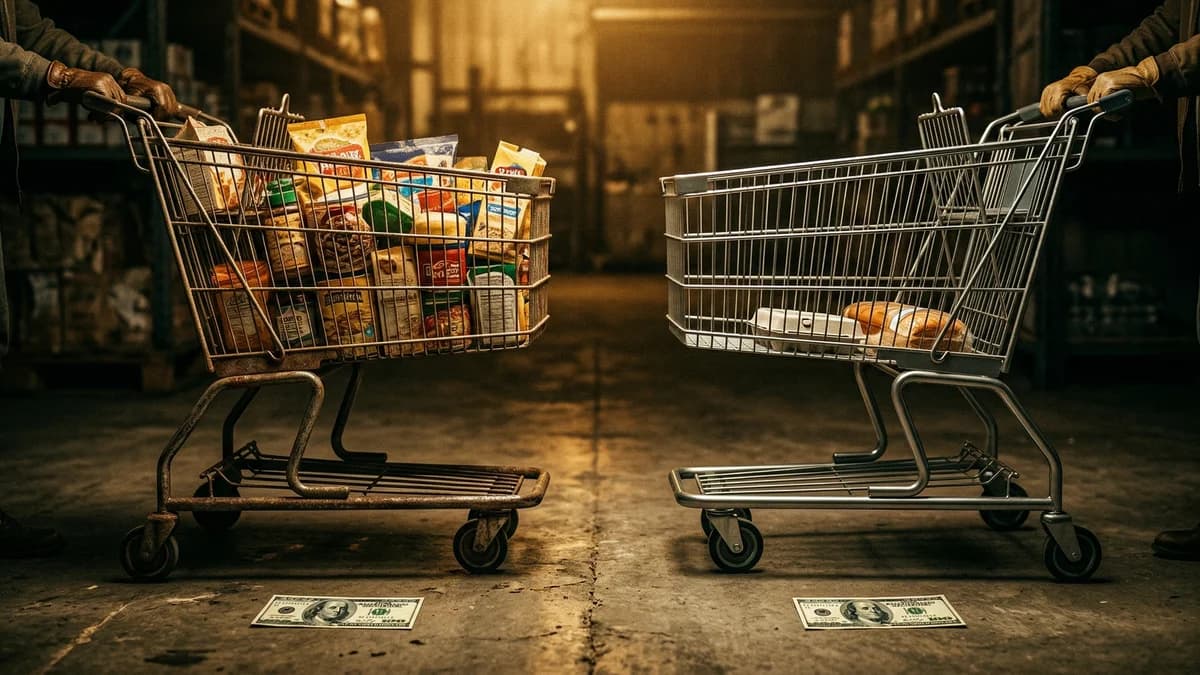
Purchasing power is what your money can actually buy. When prices rise faster than income, purchasing power falls. The U.S. dollar has lost over 25% of its purchasing power since 2015, per Bureau of Labor Statistics CPI data. That means $100 today buys roughly what $73 bought a decade ago. Your paycheck number may grow, but its real value keeps shrinking.
You got a raise last year. Maybe two percent. Maybe three. You felt good about it for a week.
Then you went to the grocery store. And the gas station. And opened your rent renewal letter. And that raise disappeared before you ever spent a dime of it.
That's not bad luck. That's purchasing power, and yours is shrinking. According to the Bureau of Labor Statistics (BLS), the U.S. dollar has lost more than 25% of its purchasing power since 2015. Your paycheck might show a bigger number than it did ten years ago. But the things you buy with that paycheck cost so much more that you're actually falling behind.
This is the most important money concept you were never taught. And it's the one that explains why everything feels harder even when you're doing everything right.
Purchasing power is what your money can actually buy. The U.S. dollar has lost over 25% of its purchasing power since 2015, according to Bureau of Labor Statistics CPI data. That means $100 today buys roughly what $73 bought a decade ago. Your money isn't just sitting still. It's shrinking.
Read more: Your Money Is Losing Value | What Is Fiat Currency?
What Does "Purchasing Power" Actually Mean?
The dollar lost more than 25% of its real value in the last decade, per BLS Consumer Price Index data. Purchasing power, also called buying power, is in the simplest terms what your money can actually buy. Not the number printed on the bill. What it gets you in the real world.
Here's the easiest way to think about it.
Imagine you're at the grocery store with a $20 bill. Five years ago, that $20 got you a gallon of milk, a dozen eggs, a loaf of bread, a pound of ground beef, and a bag of apples. Today, that same $20 might only cover the milk, eggs, and bread. Maybe the beef if it's on sale.
The bill didn't change. The $20 still says $20. But its purchasing power dropped. It buys less stuff than it used to.
That's all purchasing power means. It's a measure of what your dollars can actually do for you. And right now, they're doing less every single year.
You've felt this. Everyone has. You stand at the register thinking, "I barely got anything. How is this $85?" That feeling isn't in your head. It's purchasing power erosion, happening in real time, every time you open your wallet.
Why Is Your Purchasing Power Shrinking?
Consumer prices rose 3.4% in 2023 alone, per BLS CPI data. That means everything you bought in December cost about 3.4% more than it did in January. Your purchasing power shrank by that same amount, unless your income grew by at least that much.
The main reason your dollars buy less is inflation. Inflation means the prices of goods and services are going up over time. When prices rise faster than your income, you fall behind.
Where does inflation come from? Several places, but the biggest driver is the money supply. When the government creates more dollars, each one becomes worth a little less. Think of it like adding water to juice. More liquid in the pitcher, but every glass is weaker.
Between 2020 and 2022, the U.S. money supply grew by roughly 40%, according to Federal Reserve M2 data. Trillions of new dollars entered the system. The result? Prices climbed on everything. The Consumer Price Index hit 9.1% annual inflation in June 2022, the highest in over 40 years.
Your purchasing power didn't just shrink. It got slammed.
Read more: How the Government Prints Money
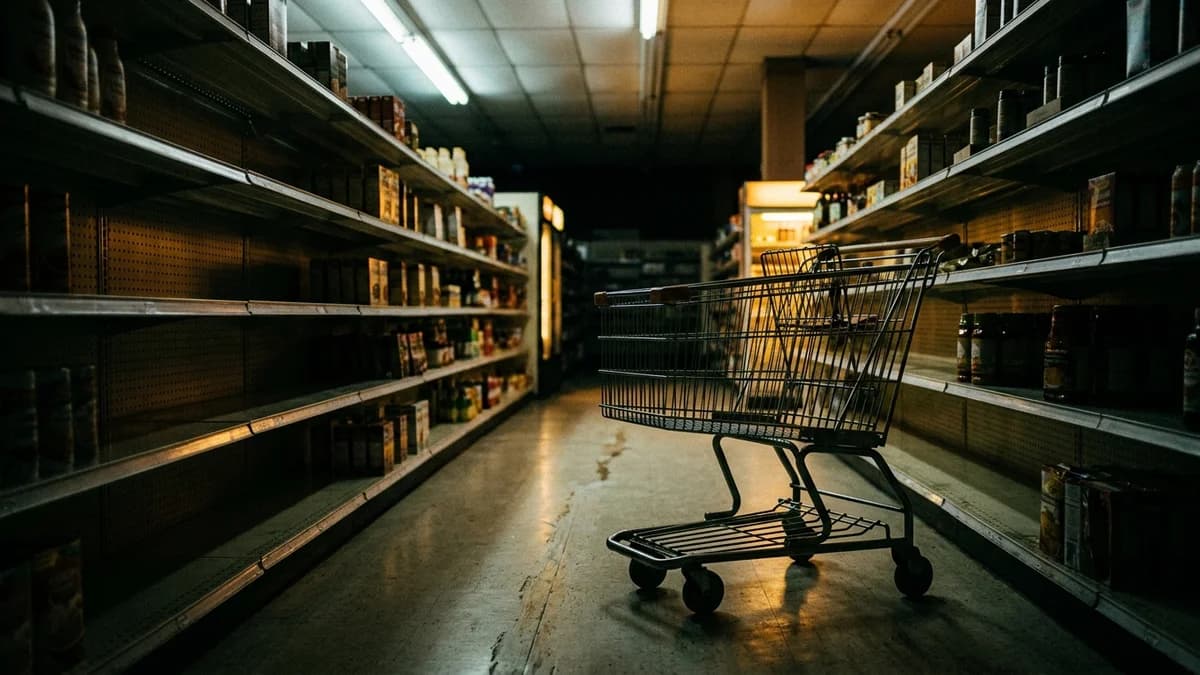
The U.S. money supply grew by approximately 40% between 2020 and 2022, according to Federal Reserve M2 data. This surge in new dollars drove the Consumer Price Index to 9.1% annual inflation in June 2022, per the Bureau of Labor Statistics, the highest rate since 1981.
What Does Shrinking Purchasing Power Look Like in Real Life?
The average cost of food at home jumped over 25% between 2020 and 2024, per USDA Economic Research Service data. You don't need a chart to see it. You just need to remember what things used to cost.
Groceries
A dozen eggs cost about $1.50 in 2019. At the peak in early 2023, they hit $4.82 per the BLS average price data. That's more than triple. Milk, bread, chicken, rice: all up 25% to 40% over the last five years. The same grocery trip that cost $100 in 2019 now runs $130 or more.
Gas
The national average for a gallon of regular gas was $2.60 in 2019, according to the U.S. Energy Information Administration. By early 2026, it's above $3.50. If you fill a 14-gallon tank once a week, that's roughly $780 more per year for the same driving.
$780/year
Extra cost for the same weekly driving (14-gal fill-up)
U.S. Energy Information Administration
Rent
Median rent in the U.S. has jumped about 30% since 2020, according to Census Bureau data. A one-bedroom that cost $1,000 per month in 2020 now costs $1,300. That's an extra $3,600 a year for the same apartment. Same walls. Same leaky faucet. Just more expensive. And rent is sticky: once a landlord raises it, the higher number becomes the new baseline, so the next increase stacks on top of it instead of resetting. Housing is usually the single biggest line in a household budget, which is why its erosion hits hardest. For the full breakdown of what is actually driving it, see why is rent so high.
How Does This Affect Your Daily Spending?
The average American household spends about $6,440 per year on food at home, according to the BLS Consumer Expenditure Survey (2023 data). With food prices up 25% or more, that spending now buys significantly less food than it did just a few years ago.
Let's look at what purchasing power erosion does to the small, daily expenses that add up fast.
Your morning coffee
A $5.50 latte every workday costs you about $1,430 a year. Five years ago, that same drink was $4.25, so the habit cost around $1,105. Purchasing power erosion didn't just raise the price of coffee. It raised the price of your routine by $325 a year.
Here's the math on three common daily habits, then versus now:
| Daily Habit | 2019 Cost (daily) | 2026 Cost (daily) | Yearly Difference |
|---|---|---|---|
| Morning coffee | $4.25 | $5.50 | +$325/year |
| Lunch out | $9.50 | $13.00 | +$910/year |
| Forgotten subscriptions (3 services) | $32/month | $48/month | +$192/year |
That's roughly $1,427 more per year on the same habits. You didn't upgrade your lifestyle. Purchasing power erosion did the upgrading for you.
$1,427 a year. What could that money do if you redirected it instead of watching it evaporate?
Eating out for lunch
A lunch that cost $9.50 in 2019 now costs $12 to $14 at most fast-casual spots. If you eat out five days a week, that's about $65 a week now versus $47.50 a week then. The annual difference: over $900. Same sandwich. Same combo meal. Just less purchasing power in your wallet.
Subscriptions you forgot about
The average American pays for about 4 streaming services, per Deloitte's Digital Media Trends survey (2024). The average price of those services has increased 25-30% over the past three years as platforms raise prices. Netflix, Spotify, cloud storage, that gym membership you haven't used since February: all quietly ticking up, all quietly eating your purchasing power.
Have you checked your subscriptions lately? Seriously. Go look.
How Does a Paycheck Lose Value Without Changing?
Real wages for most American workers have been nearly flat for decades, according to the Economic Policy Institute. "Real wages" means pay adjusted for inflation. Your paycheck number might go up, but after accounting for price increases, you're barely treading water.
Here's a simple example. Say you make $50,000 a year and you get a 3% raise. Great. Now you make $51,500.
But if inflation ran at 3.4% that year (which it did in 2023, per BLS data), the cost of everything you need went up by $1,700. Your raise covered $1,500 of that. You're $200 behind where you started, despite getting a raise.
This is the cruelest part of purchasing power erosion. It punishes people who do everything they're told to do. You go to work. You get your raise. You feel like you're making progress. But the math says you're slipping backward. The system rewards this confusion. When people don't realize they're falling behind, they don't demand more. They don't question the system. They just keep showing up, a little poorer each year, blaming themselves for not being able to "make it work."
What Your $100 Actually Buys Over Time
Real purchasing power of $100 from 2015 to 2025 (BLS CPI data)
Source: Bureau of Labor Statistics, Consumer Price Index
Real wages for most American workers have remained nearly flat for decades, according to the Economic Policy Institute. A worker earning $50,000 who receives a 3% raise still loses ground if inflation exceeds 3%, meaning purchasing power erosion can erase a pay increase before it's ever spent.
Read more: What $100 Used to Buy
Your dollars are shrinking. Learn how to fight back.
Join thousands learning what school never taught about money and inflation.
Can You Stop Your Purchasing Power from Shrinking?
You can't control inflation. You can't call up the Federal Reserve and ask them to stop creating money. But you can control what happens to the dollars you earn before inflation eats them.
The first step is understanding the problem. You just did that.
The second step is looking at where your money goes every week. Not to judge yourself, but to see clearly. How much is disappearing into things that lose value the second you buy them? Coffee, impulse buys, subscriptions you forgot to cancel, lottery tickets that pay back fifty cents on the dollar?
Read more: You're Already Wasting Money
The third step is redirecting some of that spending into something that has a chance of holding or growing in value over time. Even $20 a week changes the math. That's $1,040 a year. Put into something that grows instead of something that evaporates, and you start swimming against the current instead of getting pulled under.
You don't need a financial advisor. You don't need a big salary. You just need to stop leaving every dollar you earn in a system designed to drain its value.
A 3% raise does not mean you got ahead. If inflation ran higher than 3%, you actually lost purchasing power despite earning more on paper. Track your real costs, not just your paycheck number.
This is why people feel broke even when their income goes up. The paycheck looks bigger. The receipt total looks bigger too. The numbers agreed to disagree, and the receipt usually wins.
Real wages in the U.S. have barely moved in fifty years once you adjust for what the dollar actually buys. That's not opinion, it's in the Bureau of Labor Statistics data. So when you feel like you're running harder and staying in place, you're not imagining it. The treadmill speed keeps increasing and the belt never slows down.
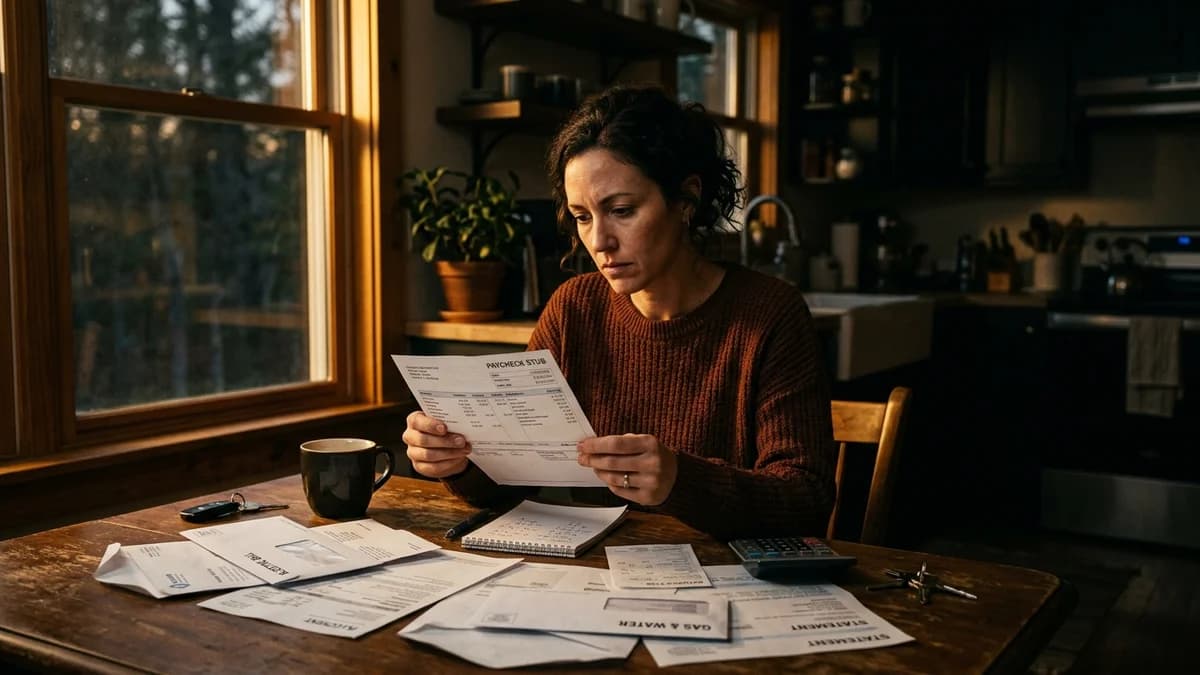
That image is what purchasing power erosion actually looks like at the kitchen table. Not a chart, not a headline. A stack of bills next to a paycheck that didn't grow as fast as they did. Every household in the country runs some version of this math every month, whether they frame it that way or not.
The goal isn't to panic about it. The goal is to recognize that leaving money in a vehicle that guarantees a slow bleed, the savings account, the checking account, the cash under the mattress, is the one move the system is hoping you'll keep making. Doing literally anything else puts you ahead of most of your neighbors.
Frequently Asked Questions
Your money is worth less than it was yesterday. It'll be worth less tomorrow. That's not a scare tactic. It's what the data says. The question is whether you keep pretending everything is fine, or start doing something about it.
Why didn't anyone teach you this in school? That wasn't an accident.
If you want to see what this erosion looks like in hard numbers, What $100 Used to Buy breaks it down item by item. And if you're wondering what your savings account is actually doing with your money, the answer will make you uncomfortable.
This article is part of the Your Money Is Losing Value series. The dollar has lost over 25% of its purchasing power in the last decade, per Bureau of Labor Statistics data. Nobody in the system was going to explain this to you. Now you know.
This article is for educational purposes only and does not constitute financial advice. Untaught does not hold, move, or custody any funds. Past performance does not guarantee future results. Always do your own research before making investment decisions.
Quick calculator
Your coffee money could have become
$16,301
from $9,900 invested