Bitcoin ATM Scams: The Script, the Machine, and Why the Money Is Gone
Bitcoin ATM scams run on one script. How the call works, why the money can't come back, FBI 2025 losses by age, and the one rule that stops every version.
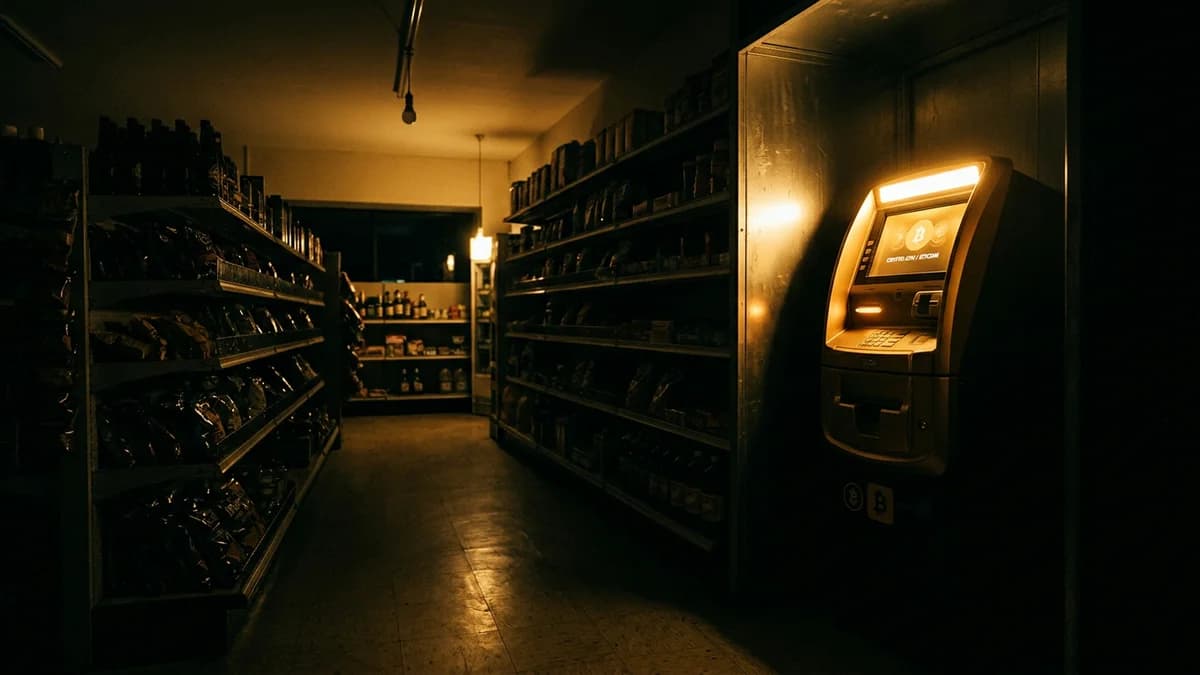
A Bitcoin ATM scam is not a broken machine or a hacked app. It is a phone script. Someone posing as your bank, the government, tech support, a relative or a romantic partner convinces you that your money is in danger, sends you to a Bitcoin ATM, and has you feed cash into it while you scan a QR code they sent. That code is their wallet. The moment the machine sends, the money is theirs, and in almost every case it is gone for good. The FBI logged 13,460 complaints involving these machines in 2025, with $389 million in reported losses, and people 60 and over lost about two of every three of those dollars.
One rule stops every version of it: if anyone tells you to pay at a Bitcoin ATM, it is a scam. Not usually. Every time. No bank, government agency, utility, tech company or real person who loves you will ever send you to one of these machines to "protect" your money or settle a debt.
Bitcoin ATMs, also called crypto kiosks, are legal machines that turn cash into bitcoin. Scammers use them because cash goes in and an irreversible payment comes out in minutes, with no teller asking questions. The script almost never changes: an alarm that your money is at risk, a demand for secrecy, a "fix" that means moving your money, a trip to the machine while the caller stays on the phone, and a QR code that sends the bitcoin to the scammer. The FBI's 2025 Internet Crime Report counts 13,460 complaints involving these machines and $389 million in losses, up 58% from 2024. People 60 and over reported $257.5 million of it. The FTC says crypto payments typically cannot be reversed, so prevention is the only reliable protection. If it already happened, call the ATM operator, then report to the FBI at ic3.gov, the FTC and local police within hours, and check your state's rules: Arizona, for example, now requires operators to refund new customers who report fraud within 30 days.
Read more: Bitcoin for Beginners | What Is a Bitcoin Wallet?
Are Bitcoin ATMs Safe? The Machine Is Legal, the Script Is the Scam
The machine itself is a legal piece of equipment in most of the country. You put in cash, it converts the cash into bitcoin, and it sends that bitcoin to a wallet address you show it. People use them to buy bitcoin with cash, and plenty of those transactions are exactly what they look like.
What makes the machines dangerous is not a flaw in the hardware. It is that they do something nothing else in a strip mall does: they turn a stack of cash into a payment to anyone on the planet in a few minutes, and that payment generally cannot be pulled back. A bank teller might ask why you are withdrawing $20,000. A gas station kiosk does not ask anything.
Scammers figured that out, and the numbers followed the machines. According to the FTC, operators reported about 4,250 Bitcoin ATMs in the U.S. in January 2020 and about 32,000 by June 2024, counts the operators supplied themselves to an industry website. Over roughly the same stretch, losses reported to the FTC through these machines grew nearly tenfold, to over $110 million in 2023. The FBI's newer count is larger still: $389 million in 2025.
| What the machine does | What the script does |
|---|---|
| Converts cash into bitcoin | Invents the reason you need cash right now |
| Sends the bitcoin to the wallet address it is shown | Supplies that address as a QR code, so the bitcoin goes to the scammer |
| Charges a fee on each transaction | Rushes you past every screen, including the warnings |
| Works the same way for every customer | Picks you, isolates you and stays on the phone |
| Is legal in most states | Is fraud in every state |
Regulators are now acting on the machines, too. Minnesota banned crypto kiosks outright starting August 1, 2026, with every machine to be physically removed by December 31, according to the City of Rochester. In Washington, D.C., the Attorney General sued one large operator in September 2025, alleging that 93% of the deposits at its machines in its first five months there were the direct result of scams and that the victims' median age was 71. Those are allegations in a lawsuit, not court findings, but they show how lopsided the traffic at some machines can be.
None of that makes Bitcoin itself a scam, any more than wire fraud makes banks a scam. It makes one payment channel a favorite tool of people who need money to move fast and never come back.
The Script, Call by Call
The reason this scam works on smart, careful people is that it is not improvised. It is a script, repeated across thousands of reported cases, and the FTC has described it step by step in its consumer alerts. Once you see the beats laid out, you can recognize them in any costume.
The Script, in Six Beats
The costume changes. The order almost never does.
Source: FTC consumer alerts “Did someone send you to a Bitcoin ATM? It’s a scam” (March 7, 2024) and “New crypto payment scam alert.”
Beat 1: The alarm
It starts with a call, a text or a pop-up on your computer saying something is wrong. Your bank account has suspicious charges. Your Social Security number was tied to a crime. Your computer has been hacked and your bank login stolen. The FTC's data spotlight says these scams often "start with a call or message about supposed suspicious activity or unauthorized charges," or with a fake security warning that impersonates a company like Microsoft or Apple. The goal of beat one is fear, because frightened people do not stop to check.
Beat 2: The secret
Next comes isolation. The caller tells you not to tell anyone, not your spouse, not your kids, not the teller at the bank. Sometimes there is a reason attached, such as a confidential investigation. The CFTC lists demands for secrecy and coaching on what to say to others as red flags. Secrecy is the scammer's protection, because the first person you tell is the person most likely to stop it.
Beat 3: The fix
Then the caller offers a way out: move your money somewhere safe before the criminals, or the government, can take it. The FTC says scammers have even called Bitcoin ATMs "safety lockers." This is the turn that matters. Nothing about a real fraud problem is ever solved by withdrawing your own money in cash.
Beat 4: The cash
You are told to withdraw cash, often a large amount, and drive to a specific machine, the kind found in convenience stores and gas stations. An FTC alert notes the caller will "stay on the phone the whole time." That is not friendliness. It keeps you from hanging up, thinking and calling someone. The CFTC lists telling you to split your payments as a red flag.
Beat 5: The code
At the machine, the caller texts you a QR code. You scan it, feed in the cash, and confirm. The code holds the scammer's wallet address, so the bitcoin your cash buys goes straight to them. The FTC's March 2024 alert puts it bluntly: "Only a scammer will give you a QR code to 'help' you deposit your life savings in a Bitcoin ATM."
Beat 6: Gone
The machine sends the bitcoin to the scammer's wallet, and from there they can move it on. The caller may even come back days later with a new problem that requires another deposit, or with an offer to recover the first one for a fee.
Why the Money Cannot Come Back
If someone steals your credit card number, you call the card company, dispute the charge and usually get your money back. That safety net exists because a bank sits in the middle of every card payment and can reverse it. A Bitcoin transaction has no one in the middle.
The FTC says it plainly: "Cryptocurrency payments typically are not reversible," and they "do not come with legal protections" like the dispute rights on credit and debit cards. Once you pay, getting the money back generally depends on the person you paid choosing to return it. A scammer is not going to.
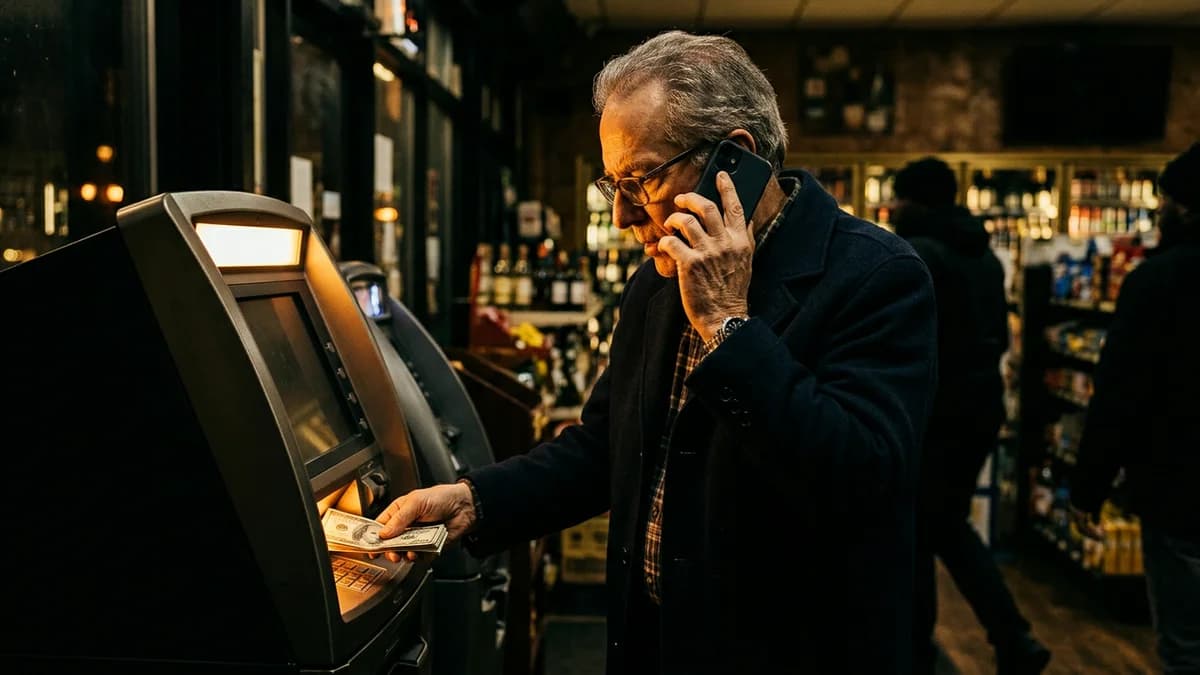
This is not a bug. It is the design. The original Bitcoin paper from 2008 argued that "transactions that are computationally impractical to reverse would protect sellers from fraud." Finality is what lets two strangers trade without a bank, and it is the same property that makes holding your own bitcoin work, as covered in our guide to Bitcoin self-custody. Nobody can claw back what you own. The flip side is that nobody can claw back what you send.
A Bitcoin ATM scam turns that property against the buyer. In this transaction the scammer plays the role of the seller the design protects, and you are the buyer with no escrow and no dispute button. The machine did exactly what it was built to do.
There are narrow exceptions. Some states now force ATM operators to refund certain victims, which is covered below. Operators sometimes flag a transaction as possible fraud before it goes through, and the FBI's guidance is simple: if a kiosk operator tells you a transaction looks like fraud and advises you to stop, stop. But once the bitcoin has left the machine and landed in the scammer's wallet, no button anywhere undoes it. That is why everything useful about this scam happens before the cash goes in.
Who Gets Targeted, by the Numbers
Anyone can be targeted, but the losses are not spread evenly. The FBI's 2025 Internet Crime Report breaks crypto ATM complaints down by age, and the shape of the chart is the story.
Crypto ATM Scam Losses Reported to the FBI by Age, 2025
People 60 and over lost $257.5 million, about two of every three dollars.
Source: FBI IC3 2025 Internet Crime Report. About $48.6 million of the $389 million total came from complaints with no age given; complaints may include other transaction types.
People 60 and over filed 6,188 of the 13,460 complaints and reported $257.5 million in losses, about 66% of the $389 million total. Divide those losses by those complaints and the average comes to roughly $41,600 per complaint for people 60 and over, against roughly $16,100 for everyone under 60 combined. Those averages are rough, since some complaints also include other kinds of transactions, but the gap is too wide to be noise.
The FTC's earlier data points the same way. In the first half of 2024, people 60 and over were "more than three times as likely" as younger adults to report a loss at a Bitcoin ATM, and the median reported loss was $10,000, against $447 for fraud in general, according to the FTC data spotlight. About 86% of those reports involved government impersonation, business impersonation or tech support scams. The Treasury's FinCEN warned banks in an August 2025 notice that some of the tech support and bank imposter scams paid through kiosks "disproportionately impact older adults."
The same FTC data shows how the script reaches people, which tells you where to put your guard up.
How Bitcoin ATM Scams Reached Their Victims
Share of FTC fraud reports, first half of 2024. Nearly half started with a ringing phone.
Source: FTC Data Spotlight, September 3, 2024. The other reports named another contact method or none, and the FTC does not break them out.
Nearly half of the FTC's reports started with a phone call. That is the single most useful fact in this section for anyone protecting a parent. The danger is not the machine on the corner. It is the phone in their pocket, ringing with a voice that sounds like the bank.
Younger people are not safe, just less often the target. People under 60 still reported about $83 million in crypto ATM losses in 2025. And the totals are almost certainly too low: the FTC notes that only 4.8% of people who experienced mass-market fraud complained to a Better Business Bureau or a government agency.
Geography matters less than you might think. In a May 2026 alert, the FBI reported that complainants in Texas lost $56.8 million, Florida residents filed 1,213 complaints and lost $32.8 million, and California complainants lost $24.0 million. Big states top the list largely because they have more people. The script does not change at the state line.
The One Rule: If Anyone Tells You to Pay at a Bitcoin ATM, It Is a Scam
The federal agencies that track this scam all land in the same place. The FTC says nobody from the government, law enforcement, a utility company or a prize promoter will ever tell you to pay with cryptocurrency, and "If someone does, it's a scam, every time." The FBI puts it this way: "No legitimate law enforcement or government official will call to demand payment via a cryptocurrency kiosk."
The rule works because it does not require you to figure out who is calling. Scammers are good at sounding like a bank, and caller ID can be faked. You do not have to win that argument. You only have to notice one instruction: go to a Bitcoin ATM. That instruction alone ends the call.
| The costume | What they might say | Why the rule still catches it |
|---|---|---|
| Your bank's fraud department | "Your account is compromised. Move your money to a safe account." | A bank never sends you to a Bitcoin ATM to protect your money. |
| A government agent (IRS, FTC, police) | "Your Social Security number is tied to a crime. Pay or be arrested." | The FBI says no real official will demand payment through a crypto kiosk. |
| Tech support (Microsoft, Apple) | "Your computer is hacked and your bank login was stolen." | The FTC says real businesses never ask you to use a Bitcoin ATM to fix a problem. |
| A utility company | "Pay today or we cut your power." | The FTC says only scammers demand utility payments in cryptocurrency. |
| A relative in trouble | "I'm in jail and need bail money. Don't tell Mom." | The FBI warns about unknown callers claiming to be someone you know who ask for crypto. |
| A romantic partner met online | "I need help with a customs fee so I can visit you." | The FBI says never send payment to someone you have only met online. |
| An investment adviser | "Deposit at this ATM to fund your trading account." | The CFTC flags promises of guaranteed wealth and fake trading platforms. |
The costumes overlap and stack. The FTC describes scams that start with a fraud alert and then bring in someone posing as a government agent, even one "claiming to be from the 'FTC'." Every handoff is another layer of costume over the same instruction.
How to say it to a parent
If you are reading this for someone else, say the rule before the call comes, not after. A rule someone heard from their own family last week beats a warning poster at the gas station. Keep it short enough to remember with a stranger shouting on the phone. The FTC's advice fits on an index card: slow down, talk with someone you trust before acting, and never withdraw cash because of an unexpected call or message. When in doubt, hang up and call the number on the back of the card or on the statement, never the number the caller gives you.
Then make one standing agreement: before moving any money because of a call, they phone one named person first, every time, no matter what the caller says. Make it a promise you both keep, not a test they can fail. Scammers count on embarrassment and urgency. A standing promise removes the need to explain anything, and it puts a trusted voice between the caller and the cash.
| If the caller says... | Do this |
|---|---|
| "Your money is at risk. Move it now." | Hang up. Call the number printed on your card or statement. |
| "Don't tell anyone, not even family." | Tell someone right away. Secrecy is the scammer's protection. |
| "Go to a Bitcoin ATM." | It is a scam, every time. End the call. |
| "Scan this QR code." | Never scan a code someone sent you to make a payment. |
| "Stay on the line with me." | Hang up anyway. A real bank will still be there when you call back. |
| The ATM screen shows a fraud warning | Stop and cancel. The warning is there for exactly this. |
Print it, tape it next to the phone, and say it out loud together once. That is the whole conversation.
If It Already Happened: The First Hour
If you or someone you love already sent money, speed matters and shame does not. These scripts are built by professionals and they work on careful people. Arizona's Attorney General specifically urges victims not to feel embarrassed about coming forward, because a delay of even a few days can cost a refund.
What follows is general information from federal and state agencies, not legal advice. If large sums are involved, talk to your state attorney general's office or a lawyer you find yourself.
First, stop all contact and send nothing more. A scammer who got paid once has every reason to call again, with a new emergency or a fee that will supposedly unlock the first deposit. If the caller ever had remote access to your computer, disconnect it from the internet and have it checked before you use it for banking again. While it is fresh, write down everything you remember: the numbers that called, the names they used, the times, and what they told you to say. Then work down this list the same day.
| Step | Who to contact | What to have ready |
|---|---|---|
| 1 | The ATM operator, using the phone number on the machine or the receipt | The receipt, date, time, amount and machine location. Report fraud and ask whether the transaction can be stopped or refunded. |
| 2 | Your bank, if the cash came from your account or the caller had your account details or remote access to your computer | Account numbers and a description of what the caller knew or did |
| 3 | The FBI at ic3.gov and your local police | The transaction ID, the wallet address, the kiosk location, the caller's phone numbers and a written account of the scam |
| 4 | The FTC at ReportFraud.ftc.gov | The same details |
| 5 | Your state attorney general | The same details, plus the date, because some state refund rules have deadlines |
The FBI's May 2026 alert asks victims to keep every receipt and transaction record and to include the transaction ID, wallet address and kiosk location in their report. Those details are what tie a report to a specific wallet and a specific machine.
State law is where real money sometimes comes back. Arizona's Cryptocurrency Kiosk License Fraud Prevention law took effect on September 26, 2025. According to the Arizona Attorney General, it caps daily transactions at $2,000 for new customers and $10,500 for existing ones, requires on-screen warnings and receipts, and requires operators to give full refunds, including fees, to new customers who report fraud within 30 days. Victims report to the Attorney General's office or local police inside that window. By August 2026, the office said it had helped 35 victims recover $171,332. Rules differ by state, and Minnesota went further by banning the machines, so ask your attorney general's office what applies where the transaction happened.
One more warning, because it catches people at their lowest point: recovery scams. Anyone who contacts you promising to get your bitcoin back for an upfront fee is almost certainly running a second scam on you. The FBI counted 10,516 recovery scam complaints in 2025 with $1.4 billion in losses, a total that can include money lost in the original scam, and it flagged fake law firms and people impersonating the FBI's own complaint center. Real agencies do not charge you to investigate.
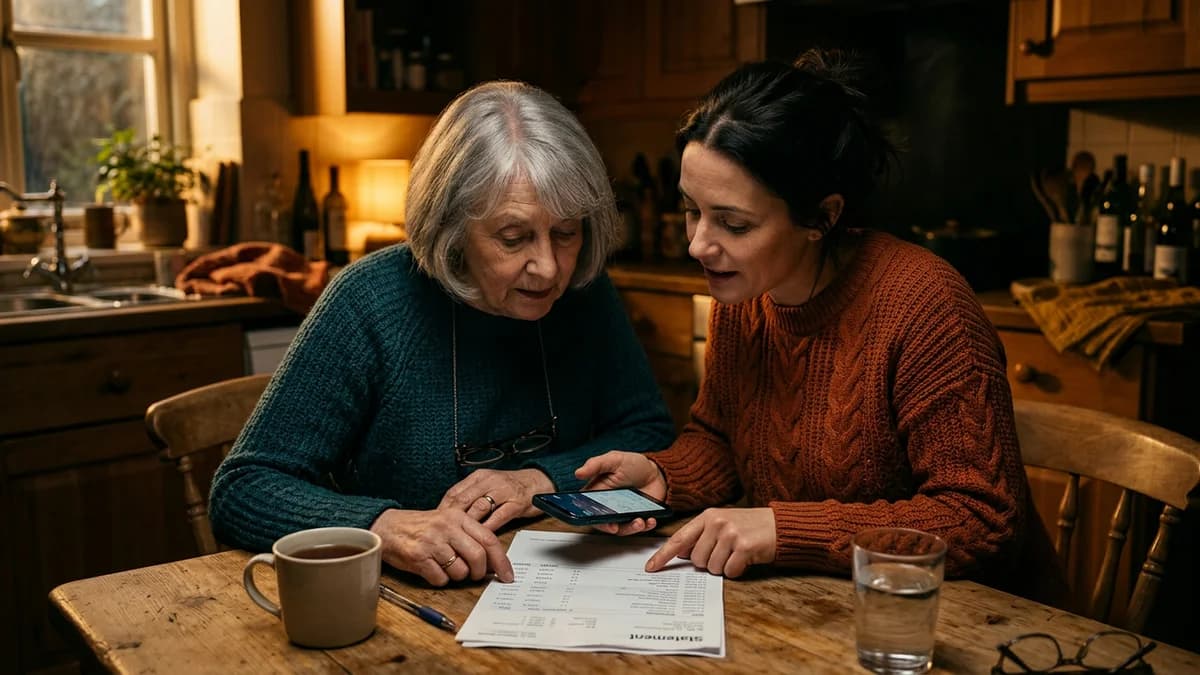
If You Still Want Bitcoin, You Never Need an ATM
This section is optional. It is for readers who came here because they are curious about Bitcoin and worried it is all a scam. If you just lost money, skip it. Nothing here is a next step after being scammed.
The scam has nothing to do with whether Bitcoin is worth owning. It exploits a payment that cannot be reversed, sent to an address someone else chose. Remove those two things and the danger goes with them. A person who buys bitcoin for themselves never needs a kiosk, never needs to carry cash anywhere and never scans a code a stranger sent.
If you do decide to buy, the safer path is boring on purpose: an app you chose yourself, on your own phone, with a small amount on a regular schedule. Our step-by-step guides to buying bitcoin on Strike and buying bitcoin on Cash App walk through the setup, and the DCA calculator lets you size a weekly amount before you spend a dollar. Untaught never holds, moves or custodies anyone's money. The point is that you stay in control of every step, which is exactly what the scammer's script is built to take away.
And the rule from this article still applies to you forever: if anyone, for any reason, tells you to pay at a Bitcoin ATM, it is a scam.
Frequently Asked Questions
The machines themselves are legal in most states and many people use them to buy bitcoin with cash. The danger is that they turn cash into a payment that generally cannot be reversed, which makes them a favorite tool for scammers. The FBI counted 13,460 complaints involving crypto ATMs in 2025 with $389 million in losses. A Bitcoin ATM is only safe if you are buying for yourself, sending to a wallet you own, and nobody told you to be there.
Listen for the instruction, not the identity. Anyone who tells you to pay at a Bitcoin ATM, scan a QR code they sent, keep the call secret or stay on the phone while you withdraw cash is running a scam, no matter who they claim to be. The FTC and FBI both say no government agency, bank, utility or real law enforcement officer will ever demand payment through a crypto kiosk.
It depends on the operator, so check the screen and the receipt before you confirm. Fees can be steep: in a September 2025 lawsuit, the Washington, D.C., Attorney General alleged one operator charged up to 26% per transaction, which would turn $100 into about $74 of bitcoin. Fees are a separate problem from fraud. A low fee does not make a scam safe, and a scam is a scam at any fee.
Usually not, because the FTC says cryptocurrency payments typically are not reversible. Act fast anyway: contact the ATM operator, your bank, the FBI at ic3.gov, the FTC and local police the same day. Some states require refunds in certain cases. Arizona, for example, requires operators to refund new customers, fees included, who report fraud within 30 days. Ignore anyone who offers to recover the money for an upfront fee.
Speed and finality. A Bitcoin ATM turns cash into a payment to anywhere in the world in minutes, with no teller and no dispute process. The CFTC describes these payments as "often immediate and irreversible," and hard to trace. Scammers still use gift cards, wires and payment apps too, but the ATM removes nearly every checkpoint between your cash and their wallet.
Hang up. Then call your bank, the agency or the company using a number you look up yourself, such as the one on the back of your card or on a statement, never the number the caller gave you. Tell someone you trust what happened. If you want to help stop the scammer, report the call to the FTC at ReportFraud.ftc.gov.
The Bottom Line
Bitcoin ATM scams are not clever technology. They are an old con, fear plus urgency plus secrecy, attached to a new payment that cannot be undone. The machine is legal. The script is the crime. And you do not need to understand Bitcoin, spot a spoofed number or out-argue a professional to beat it. You need one sentence, said to yourself and to the people you love before the phone rings: if anyone tells you to pay at a Bitcoin ATM, it is a scam.
Nobody taught most of us that money can move in ways that cannot be reversed. Now you know, and the most useful thing you can do with this article is send it to one person who answers calls from numbers they do not recognize.
The system won't warn you. We will.
Plain answers to the money questions school skipped.
This article is for educational purposes only and does not constitute financial advice. Untaught does not hold, move, or custody any funds. Past performance does not guarantee future results. Always do your own research before making investment decisions.
Quick calculator
Your coffee money could have become
$19,233
from $9,900 invested
Monthly buys, Oct 2021 to Sep 2026, at Coin Metrics month-end closes. Past results, not a forecast.