Do You Pay Taxes on Bitcoin DCA? Not Until You Sell
Buying Bitcoin with dollars is not taxable. Selling is. Years of $100 monthly buys build dozens of cost-basis lots, and which ones you sell changes the tax.

No. Buying Bitcoin with dollars is not a taxable event, no matter how many times you do it. The IRS treats digital assets as property, and buying property does not create a gain. You owe tax when you dispose of it, which means selling it, trading it for something else, or spending it. If you have been putting $50 a week into Bitcoin and never sold a satoshi, you owe nothing on that activity, and you answer "No" to the digital asset question on your return.
The part nobody tells you is what the buying quietly builds. Every single purchase creates its own cost-basis lot with its own price and its own clock. Five years of monthly buys is 60 lots, and the five-and-three-quarter-year run modeled below is 69. Five years of weekly buys is 260. The day you finally sell, you are not selling "your Bitcoin." You are selling specific lots, and which ones you sell is a choice that moves the taxable gain by more than a thousand dollars on a $2,000 sale.
Buying is not taxable. Selling, trading and spending are. There is no small-transaction exemption, so a $4 coffee paid in Bitcoin is a reportable disposition. Recurring buys create one lot per purchase: $100 a month from January 2021 through September 2026 is 69 lots, $6,900 in, worth $13,409.84 at the September 30, 2026 price. Sell $2,000 of it and the default first-in, first-out order reports a $924.53 gain. Selling the highest-cost lots instead reports a $129.82 loss. Same cash, same day, same coins, $1,054.35 of difference. Hold more than one year and the rate drops from your ordinary bracket to 0%, 15% or 20%. One deadline matters: the relief that lets you pick your lots in your own records, instead of telling your app before you sell, ends December 31, 2026.
This is general education, not tax advice. Rates, thresholds and the deadline below are specific to the 2026 tax year and to U.S. filers. Your own return depends on your income, your state and your records, so bring the numbers to a tax professional before you act on them.
Read more: What Is Dollar Cost Averaging? | DCA vs. Lump Sum
Buying Bitcoin Is Not a Taxable Event. Here Is What Is
Start with the sentence that does the most work. For U.S. tax purposes, digital assets are considered property, not currency, per the IRS. That single classification decides almost everything else, because the tax code already knows what to do with property. You have a basis in it, you hold it, and when you dispose of it you have a capital gain or a capital loss.
So the question is never "do I owe tax on Bitcoin." The question is whether a given action counts as a disposition. Buying with dollars does not. The IRS lists "purchased, but did not sell, digital assets using U.S. or other real currency" as a scenario where you answer "No" to the digital asset question on Form 1040. Your cash purchase does one thing: it sets your basis. Per the agency's digital asset FAQs, if you buy with cash, your basis "includes the amount you paid in cash for the digital assets plus the amount you paid for transaction services."
That last clause is worth a second. The fee your app charges is part of your basis, which means it reduces your eventual gain. Most people throw those receipts away. They are money.
Moving your own coins is also not a disposition. The IRS answers this one directly in its digital asset FAQs: "If you transfer digital assets from a wallet, address, or account belonging to you, to another wallet, address, or account that also belongs to you, then the transfer is a non-taxable event, except to the extent of any digital assets you use, or are withheld, to pay for transaction services to effect the transfer." In plain terms, moving coins is free, and the network fee paid in Bitcoin is itself a tiny disposition. That is why self-custody does not trigger a tax bill, though it does make your own records the only records.
Here is the full split, in the order a normal person actually runs into it.
| What you did | Taxable now? | Why |
|---|---|---|
| Bought Bitcoin with dollars | No | A purchase sets your basis, it does not create a gain |
| Bought again, 69 times, on a schedule | No | Each buy is just another lot with its own basis |
| Moved coins to your own wallet | No | No disposition, you still own it |
| Sold Bitcoin for dollars | Yes | Capital gain or loss on the lots sold |
| Traded Bitcoin for another coin | Yes | A trade is a disposition of what you gave up |
| Spent Bitcoin on goods or services | Yes | You disposed of property in exchange for the thing |
| Got paid in Bitcoin for work | Yes | Ordinary income at the value received, then a new basis |
| Still holding everything you ever bought | No | Nothing has been disposed of |
The four "yes" rows are the whole tax story. Everything that follows is about the mechanics of the first one, because selling is what DCA buyers eventually do, and it is where the hidden complexity lives.
What DCA Actually Builds: 69 Lots, Not One Position
Dollar cost averaging feels like one continuous act. You set the recurring buy once and then you ignore it, which is the entire point of the strategy. For taxes, it is the opposite of one act. Every execution is a separate acquisition of property at a separate price on a separate date, and each one has to be accounted for on its own when you sell.
To put real numbers on it, here is a model built from Untaught's own price dataset rather than a hypothetical. Buy $100 of Bitcoin on the last day of every month, starting January 2021 and running through September 2026. Prices are the Coin Metrics PriceUSD value on the last calendar day of each month, the same series behind the DCA calculator and every backtest on this site.
That is 69 purchases. $6,900 of cash in, 0.16044379 BTC accumulated, an average cost of $43,005.72 per Bitcoin, and a position worth $13,409.84 at the September 30, 2026 close of $83,579.67. A 94% gain on money that was never timed, which is what this particular stretch produced. A shorter run is a different story: starting in November 2024 instead, the same $100 a month is 23 lots, $2,300 in and $2,250.42 out, down 2.2%. The chart below shows why.
Now look at the same thing from the tax side. You do not own one position with one average price. You own 69 lots, and they are wildly different from each other. The cheapest lot bought at $16,524.22 in December 2022. The most expensive bought at $115,848.34 in July 2025. Thirteen of the 69 were worth less than what you paid at the September 30, 2026 price. All thirteen come from the November 2024 through December 2025 stretch, when prices mostly ran above it. March 2025 is the one month in that window that does not, at $82,461.45.
69 Buys, 69 Separate Cost Bases
What each $100 monthly buy paid per Bitcoin, against what the whole position was worth on September 30, 2026
Source: Untaught's bundled Bitcoin price dataset, Coin Metrics Community API PriceUSD on the last calendar day of each month. Each point is one $100 buy made on that month's last day. Month-end closes, not intra-month highs.
The red dots are the thing to see. A DCA buyer who has been at it through one full cycle is holding winners and losers at the same time, inside the same balance, in the same app. The balance shows one number and one percentage. The tax code sees 69 independent positions, 56 of which have been held more than a year on that date and 13 of which have not. That second thirteen is a different test, not the same thirteen. Only four lots, September through December 2025, are in both. The September 30, 2025 lot misses long-term treatment by a single day, because the clock starts the day after you buy and has to run past a full year, so recomputing this and getting 12 is an easy mistake to make.
That is not a filing inconvenience. It is leverage, and almost nobody uses it.
The Same $2,000 Sale, Four Different Tax Bills
Suppose that on September 30, 2026 you need $2,000. A car repair, a deductible, the ordinary kind of expense that an emergency fund is supposed to absorb and often cannot. At that day's price, $2,000 is 0.02392926 BTC, which is about 15% of the stack.
Hold two things fixed. The coins leaving the account are worth the same amount whichever lots they come from, because they are all the same asset at the same market price, so the proceeds line is $2,000 in every version below. And the cash that lands in your bank account is $2,000 in every version too. The only variable is the basis of the units the accounting treats as sold, and the gain is proceeds minus that basis.
Here is what the same sale reports under four different orderings of the same 69 lots.
| Which lots the sale draws from | Lots touched | Basis of units sold | Character of those lots | Reported gain or loss |
|---|---|---|---|---|
| Lowest cost first | 5 | $434.80 | All long-term | Gain of $1,565.20 |
| Earliest first, which is the default | 11 | $1,075.47 | All long-term | Gain of $924.53 |
| Latest first | 21 | $2,009.11 | 13 of 21 short-term | Loss of $9.11 |
| Highest cost first | 22 | $2,129.82 | 10 of 22 short-term | Loss of $129.82 |
Read the basis column against the gain column. The basis of the units sold ranges from $434.80 to $2,129.82, a factor of nearly five, on an identical withdrawal of $2,000 from an identical account on an identical day. Nothing about the transaction changed except which purchases the accounting assigned to it.
The lots-touched column explains the mechanism better than the dollar columns do. Selling cheapest-first reaches straight for the bottom of the 2022 crash, where $100 bought a lot of Bitcoin, so five lots are enough to cover the whole withdrawal. Selling most-expensive-first reaches for the top of the 2025 run, where $100 bought very little, so it takes 22 lots to assemble the same quantity of coins. Expensive lots hold fewer units, which is the same reason they carry more basis. The sale is identical in dollars and in coins. It is radically different in how many purchases it consumes, and in what those purchases cost you.
The spread between the best and worst outcome here is $1,695.02 of reported gain. Against the default, the gap is $1,054.35. Put that in tax dollars for one specific filer, a single person whose income puts their long-term gains in the 15% bracket and who owes no state tax on it: the cheapest-lots sale costs $234.78, the default costs $138.68, and the highest-cost sale costs nothing while handing them a $129.82 loss to use. Those figures are federal only. Your own number moves with your bracket, your state, and the 3.8% net investment income tax if your income is high enough to reach it.
The character column matters for the two loss rows, because losses do not pool freely. Short-term losses offset short-term gains first and long-term losses offset long-term gains first, and only what is left over crosses between the two. A $129.82 loss made mostly of long-term lots is not interchangeable with the same loss made of short-term ones.
One Sale, Four Different Taxable Gains
Reported gain or loss on the same $2,000 sale on September 30, 2026, depending only on which lots are treated as sold
Untaught's own model: $100 on the last day of every month from January 2021 through September 2026, then $2,000 sold at the September 30, 2026 close of $83,579.67. Prices from the Coin Metrics Community API PriceUSD series. Proceeds are identical in all four rows. Lot counts are how many separate purchases the sale touches.
Two honest caveats, because this is the point where this kind of article usually oversells.
First, highest-cost-first is not a magic setting that always wins. It minimizes the gain you report today by using up your most expensive lots, which leaves your cheapest ones in the account for later. The tax does not vanish, it moves. If you intend to sell everything eventually, the lifetime total is similar, and the win is deferral rather than erasure. If you intend to hold most of it for decades, deferral is the win.
Second, the ordering that is best for you depends on your own history. This model happens to have a cluster of expensive 2025 lots sitting above the September 2026 price. A buyer who started in 2023 and stopped before the run-up would not have that cluster, and for them first-in, first-out might be the cheaper order. The lesson is not "always pick one method." The lesson is that it is a choice with four-figure consequences, and leaving it unmade picks for you.
FIFO Is the Default, and the Default Is Not Free
If you say nothing, the rules decide for you, and they decide in the most expensive direction for a long-time DCA buyer. Under Treasury Regulation section 1.1012-1(j), finalized as T.D. 10000, units held in the custody of a broker for which the taxpayer has not made an adequate identification are "treated as sold, disposed of, or transferred in order of time from the earliest date on which units of that same digital asset held in the custody of the broker were acquired by the taxpayer." That is the first-in, first-out rule, and it has applied to all acquisitions and dispositions of digital assets since January 1, 2025.
For somebody who has been buying since 2021, FIFO reaches for the 2021 lots first. Those are the cheapest ones. Cheapest basis means largest gain, which is exactly backwards from what most sellers want.
The escape hatch is specific identification. Paragraph (j)(3)(ii) of the same regulation lets you choose which units are sold, and the choice is binding for the return if you make it correctly. For units sitting in a custodial app, an adequate identification is made if, no later than the date and time of the sale, you specify to that custodial broker the particular units to be sold, using an identifier the broker designates as sufficiently specific, such as purchase date and time or purchase price. A standing order counts too, which is the practical version: set the account to sell highest-cost-first once, and every future sale follows it.

There is a detail in paragraph (j)(3)(ii) that quietly matters. If your app offers only one method of specific identification, for example only highest-basis, that single method is treated as a standing order or instruction. So the setting your app happens to offer can become your tax position by default. Which means the honest first step for any DCA buyer is not reading more about tax law. It is opening the app, whether that is Strike, Cash App or anything else, finding whatever it calls its cost-basis or tax setting, and seeing which choices exist at all.
If the answer is "none," keep reading, because that is the situation the next section is about, and it has an expiration date on it.
The Deadline Nobody Put in the App: December 31, 2026
When the lot rules took effect in 2025, a lot of custodial apps simply were not built to accept a customer's instruction about which units to sell. The IRS responded with temporary relief. Under Notice 2025-7, a taxpayer could make an adequate identification by recording the particular units, or a standing order, in their own books and records, instead of communicating it to the broker at all.
That relief was extended once. Notice 2026-20, published in Internal Revenue Bulletin 2026-15 on April 6, 2026, defines the relief period as beginning January 1, 2025 and ending December 31, 2026. The reason given is plain: brokers told Treasury they had substantially built the systems to accept specific identifications but were not ready yet, and expected to finish during 2026.
The notice is equally plain about the other end of it. Section 5 says taxpayers "may not rely on the temporary relief described in section 4.02 of this notice to identify units held in the custody of the broker as the units sold, disposed of, or transferred in the case of sales, dispositions and transfers made after the relief period ends."
What that means in practice: for a sale made in 2026, writing down which lots you sold, before you sell them, is enough. For a sale made on or after January 1, 2027, your own notebook is no longer enough for coins held in an app. You have to tell the app, through whatever mechanism it gives you, at or before the moment of sale. If your app has no such mechanism by then, your sales fall back to first-in, first-out.
The same action, on two sides of one date:
| How you pick your lots | Sale made in 2026 | Sale made in 2027 or later |
|---|---|---|
| Written in your own records before the sale | Counts | Does not count, for coins in an app |
| Standing order recorded in your own records | Counts | Does not count, for coins in an app |
| Specified to the app at or before the sale | Counts | Counts |
| Standing order set inside the app | Counts | Counts |
| Nothing at all | Earliest lots first | Earliest lots first |
| Coins in a wallet you control yourself | Your own records, always | Your own records, always |
One more wrinkle worth knowing before it surprises you. The same notice says the relief does not apply to the information reporting rules, so for 2026 transactions the acquisition date and basis your app reports to you may not match the lot identification on your own books. Two documents, two different numbers, both correct in their own frame. Your records govern your return if the identification was properly made, but you should expect the mismatch rather than panic about it.
None of this touches coins in a wallet you control yourself. Outside broker custody the rule has always been specific identification on your own books and records, and that does not expire.
One Year Is the Line That Changes the Rate
Holding period is the other lever, and it is simpler. Hold more than one year before you dispose, and the gain is long-term. One year or less, and it is short-term. The counting is specific: per IRS Topic 409, you count from the day after the day you acquired the asset up to and including the day you disposed of it.
Why it matters: net short-term capital gains are taxed as ordinary income at graduated rates, while long-term gains get their own schedule. For the 2026 tax year, Revenue Procedure 2025-32 sets the long-term thresholds for an unmarried filer at a maximum zero rate amount of $49,450 and a maximum 15% rate amount of $545,500. The same document sets the ordinary brackets that short-term gains land in.
| 2026 single filer, taxable income including the gain | Short-term rate | Long-term rate |
|---|---|---|
| Up to $12,400 | 10% | 0% |
| $12,400 to $49,450 | 12% | 0% |
| $49,450 to $50,400 | 12% | 15% |
| $50,400 to $105,700 | 22% | 15% |
| $105,700 to $201,775 | 24% | 15% |
| $201,775 to $256,225 | 32% | 15% |
| $256,225 to $545,500 | 35% | 15% |
| $545,500 to $640,600 | 35% | 20% |
| Above $640,600 | 37% | 20% |
These are marginal rates, so a gain that straddles a line is taxed partly at each one rather than all at the higher rate. The long-term rate turns on your taxable income after the gain is added in, which is why the gain can push itself from 0% into 15%.
Look at the $50,400 to $105,700 row, which is where a large share of working people sit. A short-term gain there costs 22%. The same gain, on coins held a day longer than a year, costs 15%. And below $49,450 of taxable income, a long-term gain is taxed at zero while a short-term gain still costs 10% or 12%.
Run that against the model. The default FIFO sale produced a $924.53 gain, and because FIFO reached for 2021 lots, all of it was long-term. For a single filer with $45,000 of taxable income before the sale, $45,000 plus $924.53 stays under the $49,450 ceiling, so the federal tax on that gain is nothing at all. Push the same gain into the short-term column and it costs $110.94 at 12%.
This is the one place where the default actually helps a DCA buyer: FIFO reaches for the oldest lots, and old lots are long-term by definition. If you are going to sell soon and your income is modest, that may be exactly what you want. The point stands either way, which is that you should know which lots are leaving before they leave.
Your App Will Not Report Basis on 60 of Those 69 Lots
There is a widespread assumption that the new tax forms solve the recordkeeping problem. They solve part of it, later, and not the part DCA buyers need most.
Brokers must report gross proceeds for transactions effected on or after January 1, 2025, and must report basis on certain transactions effected on or after January 1, 2026, per the IRS. Two different start dates, and the gap between them is the whole issue. Proceeds reporting tells the IRS what you sold something for. Basis reporting tells it what you paid. For a year, one half of the subtraction was on the form and the other half was not.
Even now that basis reporting has started, it only covers what the rules call a covered security. Per the Instructions for Form 1099-DA, a covered security is "a digital asset acquired after 2025" in an account for which the broker provided custodial services and held there "until the broker effects the disposition." Acquired after 2025. Everything bought before January 1, 2026 is noncovered, and for noncovered assets the broker is not required to report basis at all.
Apply that to the 69-lot model and the number is stark.
60 of 69 Lots Are Yours to Prove
Monthly Bitcoin buys by year, split by whether an app is required to report their cost basis to the IRS
Sources: IRS, Digital assets, for the January 1, 2026 start of basis reporting, and the Instructions for Form 1099-DA (2026) for the covered security definition. Lot counts are Untaught's own model of $100 a month from January 2021 through September 2026.
Sixty of the 69 lots, carrying $6,000 of the $6,900 invested, are noncovered. Only the nine 2026 buys are covered. If you started dollar cost averaging at any point before 2026, and most people reading this did, the overwhelming majority of your cost basis exists nowhere except in your own records and your app's transaction history. Nobody is going to hand it to you on a form.
Which leads to the single most useful thing in this article, and it takes about twenty minutes: export your full transaction history from every app you have ever bought in, today, and save it somewhere that is not that app. Apps get acquired, shut down and change their export windows. Your 2021 buys are the most valuable lines in that file precisely because they are the cheapest, and they are the ones no form will ever reconstruct for you.
Spending Bitcoin Is Selling Bitcoin
This is the rule that catches people who have done everything else right, and it is worth being blunt about it.
If you pay for something with Bitcoin, you have disposed of property. The IRS FAQ states it directly: if you pay for services using digital assets, you have disposed of the digital assets in exchange for the services provided, and you will have capital gain or loss on the disposition. The gain is the value of what you received minus the basis of the units you spent.
There is no small-transaction exemption. The IRS instruction is to report income, gain or loss from all taxable transactions involving digital assets regardless of the amount. A $4 coffee bought with Bitcoin that cost you $1.60 is a $2.40 capital gain, and it is reportable. Not because anyone thinks that is sensible policy, but because the law makes no exception for size.
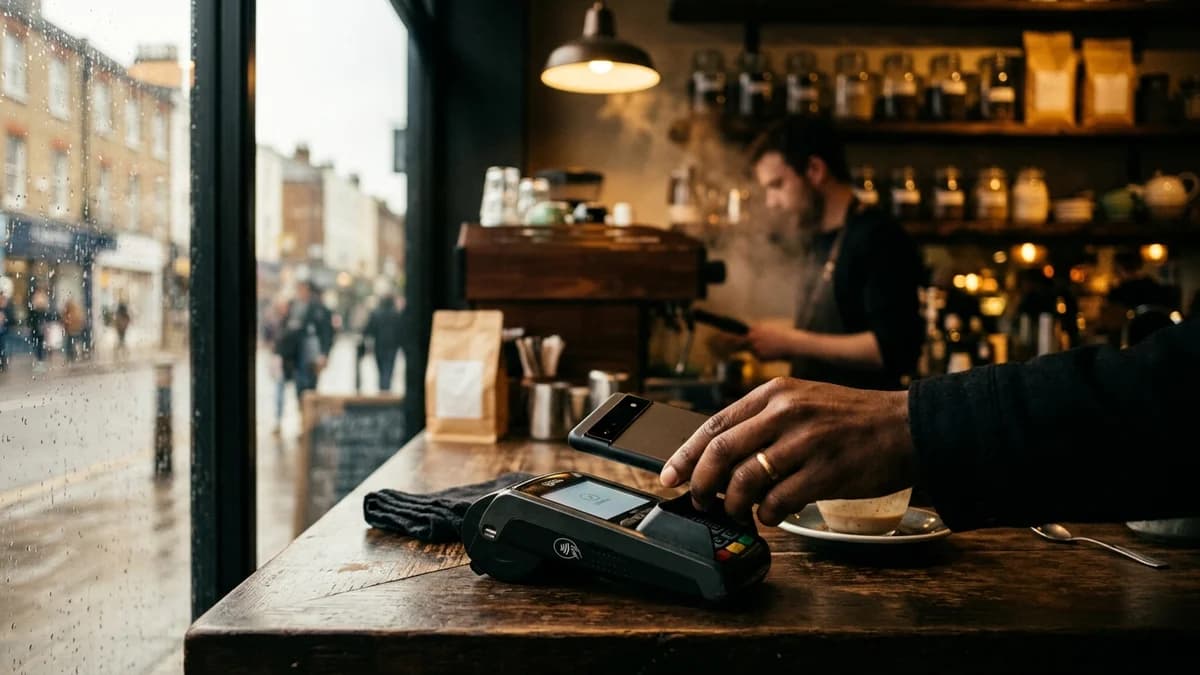
Congress has noticed. H.R. 10357, the Digital Asset Tax Certainty Act, was approved by the House Ways and Means Committee by a vote of 38 to 5 on September 16, 2026, per the committee's own announcement, and it includes relief aimed at exactly this kind of trivial transaction. Advancing out of committee is not becoming law. As of this writing no such exemption exists, and planning around a bill that has not passed is how people end up filing wrong.
The practical conclusion is not complicated. If your intent is to accumulate, do not use the accumulation as a payment method. Spending from a DCA stack converts a clean "nothing to report" year into a year of reportable micro-dispositions, each one needing a basis and a holding period. Keep the money you spend and the money you hold in different places. That is also just better behavior, which is the whole argument for buying on a schedule in the first place.
What Your Records Actually Have to Show
The standard is not "keep some receipts." The IRS requires "records that are sufficient to establish the positions taken on Federal income tax returns, which may include records documenting receipts, sales, exchanges, dispositions or transfers of digital assets and the fair market value."
For a DCA buyer, that resolves to five fields per purchase: the date, the dollars paid, the units received, the fee, and which app it happened in. That is it. A spreadsheet row per buy, 69 rows in the model above, is a complete and sufficient record. Most apps will export exactly those columns.
One more thing if you have bought in more than one place. The lot rules work wallet by wallet and account by account, not across everything you own pooled together, so each app carries its own set of lots. Revenue Procedure 2024-28 gave taxpayers a safe harbor for allocating basis acquired before January 1, 2025 to specific wallets or accounts, on a reasonable allocation from their own records. If you have been buying in two apps for years and have never separated the records, that is the shape of the problem.
When you do sell, the reporting runs through Form 8949 and Schedule D. Short-term transactions go in Part I, long-term in Part II, and the details of each transaction go on a separate row, with an attached-statement exception for long lists. Digital assets got their own boxes, which trips up people reusing stock-sale habits.
| On Form 8949 | Short-term box | Long-term box |
|---|---|---|
| Basis was reported to the IRS | Box G | Box J |
| Basis was not reported to the IRS | Box H | Box K |
| No Form 1099-DA was received | Box I | Box L |
Given the covered-security dates above, most DCA sellers for the next few years are in the middle row, box H or box K, filling in the basis themselves. The instructions are explicit that where no basis is shown on the form, you enter the correct basis in column (e). Correct, not estimated.
Note what the separate-row rule means for a weekly buyer. Five years of weekly purchases is 260 lots, and a single sale under FIFO can walk through dozens of them. That is the real cost of ignoring lot selection: not just a higher gain, but a longer form.
When a Loss Is Worth Something
Thirteen of the 69 lots in the model are underwater, and losses are not only bad news. A capital loss offsets capital gains first. If your losses exceed your gains, you can deduct up to $3,000 of the excess against other income, $1,500 if married filing separately, and carry whatever is left forward to later years.
None of that happens on its own. An unrealized loss does nothing for you at all; it is just a number on a screen. It becomes usable only when you dispose of the lot, which is the mirror image of the rule that makes buying free. Across the 13 underwater lots, the model is holding $209.73 of loss on the $1,300 that bought them, and they are not evenly sized.
The 13 Lots Holding a Loss
How much of each $100 buy was underwater on September 30, 2026
Untaught's own model, priced from the Coin Metrics Community API PriceUSD series. A lot is underwater when the price it paid sits above the September 30, 2026 close of $83,579.67.
That is why the highest-cost-first sale in the table above is more interesting than a zero tax bill. It produced a net $129.82 loss on a sale that handed over $2,000 in cash. The cash is not income. In that ordering the basis of the units sold, $2,129.82, is larger than the $2,000 received, so the whole withdrawal is a return of your own money and the loss on top of it is usable.
One thing that is often stated too confidently, so here it is with the hedge it deserves. The wash sale rule, which disallows a loss when you rebuy a substantially identical position within 30 days, lives in 26 U.S.C. 1091, and the statute is titled "Loss from wash sales of stock or securities" and reaches losses on "shares of stock or securities." Since the IRS treats digital assets as property rather than as securities, the common reading of the statute is that it does not reach a Bitcoin sale. That is an interpretation of the statute's scope, not a published IRS ruling, and legislation to change the treatment has been proposed more than once. Do not build a strategy on it without professional advice, and be aware that a recurring buy running on autopilot is itself a repurchase inside 30 days of almost any sale you make.
Frequently Asked Questions
Not on the buying. The IRS treats digital assets as property, and buying property with dollars is not a taxable event, however many times you do it. You owe tax when you dispose of it by selling, trading or spending. If you bought all year and sold nothing, that activity produces no tax and you answer "No" to the digital asset question on Form 1040.
A lot is one acquisition of property at one price on one date. Because dollar cost averaging executes a separate purchase every week or month, each execution becomes its own lot with its own basis and its own holding-period clock. Five years of monthly buys is about 60 lots. Five years of weekly buys is about 260. When you sell, the gain is calculated against the basis of the specific lots sold, not against your average price.
Per lot. Your basis in each purchase is the dollars you paid plus the transaction fee, and the units you received at that price. If you do not identify which units you are selling, units held in a custodial app are treated as sold earliest-first, which is the FIFO rule. If you do identify them, the lots you chose govern. Export your full transaction history and keep five fields per buy: date, dollars, units, fee and which app.
No. FIFO is the default that applies when you have not made an adequate identification of the units sold. You can instead specifically identify which units are sold, including by standing order. For coins in a custodial app, the identification normally has to be given to that app no later than the date and time of the sale. Through December 31, 2026, temporary IRS relief lets you make it in your own books and records instead, and that relief ends with the year.
It depends on the gain, not the amount withdrawn, and on how long you held the lots sold. In the model in this article, selling $2,000 worth reported a $924.53 gain under the default order. For a single filer whose long-term gains fall in the 15% bracket, with no state tax, that is $138.68 in federal tax, or $234.78 if the sale had drawn from the cheapest lots instead, or nothing at all if their income keeps them in the 0% long-term band. Your own number moves with your bracket and your state. The withdrawal itself is not income, only the gain inside it is.
No. Transferring your own coins between wallets you control is not a disposition, because you have not sold or exchanged anything. It does mean the exchange no longer holds your records, so export your transaction history before you move coins out, not after.
No. The IRS instruction is to report gain or loss from all taxable digital asset transactions regardless of the amount, so a few dollars of gain on a coffee is reportable. Bills creating a small-transaction exemption have been introduced and one advanced out of committee in September 2026, but none has become law, so nothing has changed yet.
Partly, and probably not for your oldest buys. Brokers report gross proceeds for transactions on or after January 1, 2025, and basis only for covered securities, which means digital assets acquired after 2025 in that custodial account. Anything you bought before January 1, 2026 is noncovered and its basis does not have to be reported, so for most people who started earlier the majority of their basis exists only in their own records.
The loss offsets your capital gains first. If your losses exceed your gains, you can deduct up to $3,000 of the excess against other income, $1,500 if married filing separately, and carry the rest forward to later years. Choosing to sell your highest-cost lots is how a sale that gives you cash can still report a loss.
The Bottom Line
The answer to the question is short: no tax on buying, tax on selling, trading and spending, with no exemption for small amounts. The answer to the question underneath it takes longer, which is why so little has been written about it.
Dollar cost averaging is the right behavior and it creates a records problem as a side effect. Every buy is a lot. The lots are not interchangeable. The default order picks your cheapest ones first, which maximizes the gain you report, and the window to override that choice in your own notebook closes on December 31, 2026. Meanwhile the forms will not reconstruct the basis of anything you bought before 2026.
Three things to do this week, none of which require a tax professional. Export your complete transaction history from every app and store it outside that app. Open the app and find out whether it lets you choose a cost-basis method, and if it does, set it deliberately. And keep the Bitcoin you are accumulating separate from any Bitcoin you might spend.
If any of the vocabulary above was new, start with Bitcoin for beginners. Then take the export to someone qualified before you sell. Nothing here is tax advice, and the difference between a good conversation with a professional and a bad one is almost entirely whether you walk in with your lots.
The system never taught you this either.
Plain answers to the money questions school skipped.
This article is for educational purposes only and does not constitute financial advice. Untaught does not hold, move, or custody any funds. Past performance does not guarantee future results. Always do your own research before making investment decisions.
Quick calculator
Your coffee money could have become
$19,233
from $9,900 invested
Monthly buys, Oct 2021 to Sep 2026, at Coin Metrics month-end closes. Past results, not a forecast.